Showing posts with label Fantasy. Show all posts

Friday, January 16, 2009

Inkheart

Author: Funke, Cornelia
Publisher and Date: The Chicken House, 2003
Genre: Fantasy
Grade: 4-6

Summary:

This book transports its reader to a magical world where books themselves come to life. Meggie is a 12-year-old girl whose childhood has consisted of two major facts. The first fact is that her mother disappeared when she was a young child, and the second fact is that she and her father have moved around a lot her whole life. Meggie’s father (Mo) is a famous book binder and they travel around the country following his work. Meggie’s life takes an unexpected turn when a figure from Mo’s past (Dustfinger) shows up late one night. After a whispered conversation and an early morning attempted get away, Meggie realizes that something is very wrong. The book takes readers to the house of book loving Aunt Elinor, to the seaside town of the writer Fengolio, and ultimately to the run down village controlled by the evil Capricorn. Throughout this incredible story Meggie begins to unravel the secrets of her past. She learns that her father has the unique ability to “read” characters and objects out of books and unfortunately accidentally into books as well. Meggie’s father had accidentally read the evil Capricorn out of the book “Inkheart” several years earlier. Capricorn is now after her father and his last surviving copy of “Inkheart.” It is ultimately up to Meggie to prove how brave she can really be and find a way to save her father, mother, Aunt, and others with a happy ending before it is too late for them all.


Response:

This is such a great book! It is literally one of those page tuners that will keep you up late into the night, engrossed in a world that feels as real as your own. Cornelia Funke does such a great job of creating characters with such unique and loveable details. I would love to be able to “read” characters like these out of the book and into our world. One of my favorite characters of the book would have to be Meggie. She is so real throughout the entire story. She faces many of the challenges kids can face throughout their lives and does so with bravery and maturity. (She does also have her moments of sass just like any pre-teen girl.) She deals with loss, love, betrayal, and fear. She would be a great role model for children to learn from and look up to. One of my favorite things about her is the fact that she absolutely loves to read. She and Mo read everywhere, from the kitchen table in the morning to their beds at night. Mo even made her a beautiful box to put all of her favorite stories in. I think this sends out such a positive message to children. That not only is it good to read, but it is also fun to read. Reading can take you to a whole new place!

One of the things that I found most unique about this book was that it opened my eyes to new way of thinking. Often when I read books, I find myself falling into the story. However, in this book the characters were the ones falling into our world. It showed readers how hard it can be for outsiders to learn how to function in such a new and unusual setting. While I was reading, I compared how Dustfinger and Farid felt to how an immigrant into a new country would feel. It truly opened my eyes to a new way of thinking.


Teaching Ideas:

There are so many ways a story like this could be used in classroom. One of the first things I thought of to do with a class is to let the students try to write a story that they would want to “read” to life. They would have to think about what would be the good or bad outcome of such a thing. You could also have students to try to write an alternate ending the story. It would be very interesting to see what your students could come up with. One thing I would definitely have students do would be to discuss the themes of the story. This is a story rich with themes, with one of the more prominent themes being the struggle between good and evil. All in all, a book as good as this one can insprire students to want to read, to write more creatively, and to even think more open mindedly. It is a book that everyone should read and have available in their classroom or library for sure! I look forward to reading (and writing) about the sequel “Inkspell.”

P.S. Here is a link for some more lesson plan ideas:

http://www2.scholastic.com/browse/unitplan.jsp?id=324


Sunday, June 8, 2008

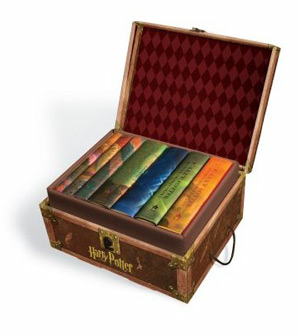
Harry Potter :-)


I just recently finished reading all seven of the Harry Potter books, and to say that I loved these books would be an understatement. J.K. Rowling is such a talented writer and her books can impart many great lessons to young readers.


One of the things I loved about Harry Potter was his knack for choosing good friends. His choice of close friends often stuck others as odd. He chose a frowned upon "muggle "lover’s son, Ron; a “mud blood”, Hermione; a dreamer, Luna; and one of the most picked on kids in school, Neville. His actions prove that a person’s background, physical appearance, and social standing doesn’t matter. A true friend can come from any background or social standing. This is such a great lesson for children and adults alike! Another thing that I especially loved about Harry Potter was his humble beginning and selfless attitude. Harry was raised by his Uncle to see himself as worthless, and even when he learned of his fame, he never became selfish or reckless. Throughout the book he always thought of others and strove to protect them and put them first. Harry is the type of friend anyone would be lucky to have, and the type of character I would love for kids and my future students to look up to. The final thing I have to say about the Harry Potter series is that I fully appreciated how the power of love conquered all. This is such an important lesson for kids to learn. Underneath the magic, the cool creatures, and the daring adventures, it is love that saved Harry from his enemies and love that helped Harry survive all his troubles.

Here are some great sites with lesson plans all about Harry Potter!


Be sure to read all seven books and check out J.K. Rowling’s amazing website!

Wednesday, April 16, 2008

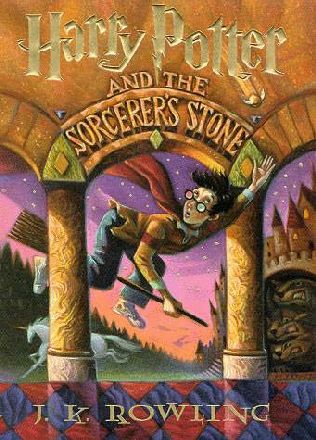
Harry Pottter and the Socerer's Stone


Title:Harry Potter and the Sorcerer's Stone
Author: J.K. Rowling
Illustrator: Mary Grandpr'e
Publisher and Date: Aurthur A. Levine Books, 1997
Genre: Fantasy
Age Range: 4th-6th grade

Summary:
Harry Potter is the loneliest, most miserable boy in the muggle (human) world. He’s shunned by his relatives, the Dursley’s, that have raised him since infancy. He’s forced to live in the cupboard under the stairs, to wear his Cousin Dudley’s hand-me-down clothes, and to go to his elderly neighbor’s house when the rest of the family is doing something fun.

On his eleventh birthday, however, Harry’s life changes forever. After much trouble and many letters, a giant named Hagrid informs Harry that he’s really a wizard and will soon be attending Hogwarts School of Witchcraft and Wizardry. Harry also learns of his fame and hero status in the wizarding world; when he was an infant, the evil Lord Voldemort killed his parents and then tried to kill Harry as well, but Harry survived and allegedly destroyed Lord Voldemort in the process!

When Harry hears the news, he is shocked and confused. Can it all be true? Everything Hagrid told him turns out to be true, and with a joyful heart Harry starts wizarding school in September. He quickly becomes best friends with a boy named Ron Weasley, and before they even make it to Christmas, they break a lot of school rules. For example, they attack a troll and prevent it from killing fellow student, Hermione Granger, while they are supposed to be fleeing to their common rooms with their fellow students. After the troll incident, the three become inseparable, and Harry is amazed to have found such great friends. He is constantly busy trying to stay on top of the mounds of homework, as well as participating in weekly Quidditch practices. Quidditch is the most popular sport among wizards and Harry is the youngest Quidditch player at Hogwarts in over a century.

As the year progresses, the three friends set out to solve the mystery of the gigantic three-headed dog that is guarding a secret in the school. They deduce that a very valuable object, the Sorcerer’s Stone, is being hidden in the school (it can lead to eternal life and abundant wealth). They began to suspect Professor Snape (one of the meanest Professors at Hogwarts) of trying to steal the stone, and they quickly take action to circumvent the theft.

Things come to a head when they sneak past the vicious, three-headed dog and go down into the bowels of the school, determined to save the stone. Ron and Hermione help Harry get through the challenges set forth to stop the thief(playing music for the three headed dog, finding the “right” flying key, winning a life size game of chess, solving a potions riddle), but Harry ends up alone to face his final challenge. He is surprised to find Professor Quirrel in the final room also searching for the Sorcerer’s Stone. Professor Quirrel is a follower of Lord Voldemort and they now share one body. Harry is forced to do battle with the Lord Voldemort, and he’s able to save the Sorcerer’s Stone, although he’s almost killed in process. The school headmaster, Dumbledore, arrives just in time to save Harry.

The school year ends spectacularly. Harry, Ron, and Hermione are honored for their bravery and service to the school, Gryffindor wins the House Cup for the first time in seven years, and Harry leaves to go back to the Dursley’s for the summer feeling as if he’s finally found a place where he truly belongs.

Response to Themes:
Harry Potter is a fantastical novel full of mystical creatures and magical people, yet it is also a very didactic book. It touches on so many important themes and life lessons that are very applicable to student’s lives today. A theme that runs throughout the story is the importance of one’s name and identity. In the beginning of the book, Harry Potter was the least important resident on Privet Drive or anywhere else for that matter. He was despised by his aunt and uncle, picked on by his cousin Dudley, and treated as an outsider at school. In the muggle world, the name Harry Potter evoked pity and sympathy if anything at all. This all changes however a few chapters into the book. Harry discovers that his name evokes fame, heroism, bravery, and respect in the wizarding world, all because of his actions as a baby. Another character whose name is especially important in the book is Lord Voldemort. His name is so feared that most wizards and witches refer to him as “you know who”. I think that this theme can have two implications for students. The first is that our names are attached to our reputations. We have to make sure that our actions reflect the kind of reputation we would like to have; Voldemort’s actions were evil and wrong, therefore he got the reputation of being evil and his name from then on evoked fear and hate. The second way to view this theme is that we should not judge people by their previous identity or by their name. Harry Potter was the same boy in both the muggle and the wizarding world, yet he achieved so much more in the wizarding world because he had people who believed in him and supported him.

Another important theme from the book is the power of love. One of my favorite parts of the book is when Dumbledore explains to Harry about his mothers love for him. He says, “Your mother died to save you. If there is one thing Voldemort cannot understand, it is love. He didn’t realize that love as powerful as your mother’s for you leaves its own mark. Not a scar, no visible sign….to have been loved so deeply, even though the person who loved us is gone, will give us some protection forever. Quirrell….could not touch you for this reason. It was agony to touch a person marked by something so good.” Love is a powerful emotion and a gift that we can bestow on anyone. To be loved and cared for is probably one of the most important things in life. Love gives us the strength and confidence to face our daily lives.

Prejudice is another important theme throughout the book. Harry’s Aunt and Uncle had prejudice against him and his “kind” throughout the book. Their attitude about him put a wall up between them and kept them from becoming a close family. Prejudices can ruin relationships and reputations. Is it not better to actually get to know someone than to simply think you do? People can surprise you if you take the time to get past what you think you know and actually get to know them. I think this is an especially important lesson for students today. In school there are always kids who are bullied, picked on, and made fun of just because they are different or we have a prejudice against them. In my classroom I want my students to form their own opinions about others (and not just to rely on what they have been taught in the past), and treat everyone with respect.

Another central theme in the book deals with making choices and decisions. Every day of our lives we have to make choices. We decide what to eat and to wear, whether or not to come to school or to try in school, how we treat others, who are friends are, ect. We are literally bombarded with choices everywhere we turn. Some are big choices while others are small choices. Harry was faced with several of each kind throughout the book. He had to decide to trust what Hagrid told him was true about his past, he had to choose what kind of friends he would make at school, and he had to choose to follow his heart to do what he thought was right. Harry’s choices ultimately led him into danger and breaking rules, but also to saving the school and protecting himself and others. Our choices might not always be as big as Harry’s, but we need to always remember that each choice we make is important. Everything we do in life has an impact on us and others.

The final theme that I want to point out is the importance of our dreams. Our dreams are what push through life; they’re what we strive for and work towards. In Harry Potter, dreams are specially represented by a magical mirror, the Mirror of Erised. The inscription of the mirror reads, “erised stra ehru oyt ube cafru oyt on wohsi,” which when reversed reads I show not your face but your heart's desire. According to headmaster Dumbledore, the mirror "shows us nothing more or less than the deepest, most desperate desire of our hearts" When you look into this mirror, it will show you exactly what your hearts desire is. When Harry looks in the mirror he sees his parents and other relatives. He gets to meet them and spend time with them; something he was never able to do in reality. In the book Dumbledore takes the mirror to a new hiding place so that Harry can no longer spend his time looking into it. Dumbledore is teaching Harry a very hard lesson; he is showing him that we cannot just live in our dreams, we have to face reality. Dreams are wonderful and necessary, but if we spend all of our times caught up in fanaticizing about our dreams rather then taking the steps or actions necessary to make our dreams real, then really what good are our dreams? If Harry would have spent his life in front of the mirror it would have been wasted! We can’t just have dreams and desires (to have them is not enough), we have to live our lives in such a way that we actively pursuing them.

The following is my representation of the Mirror of Erised. If I were to look into the mirror at this point in my life, I would see my future classroom filled with students ready to learn and make their mark on the world. My ambition and my dream is to be the best teacher I can be.
When I created this mirror I attached my dream to the mirror with Velcro, that way my students can create their own dreams and place them on the mirror as well.


Teaching Ideas:
This would be a great book to use with older children. I would encourage them to pick out and explore it's themes just as we have done. I think it's very important for students not to just read a book, but to actively think through its characters and themes as well. Here's another great teaching idea from readwritethink.org.

Finally, these are few of my favorite Dumbledore quotes from the book…….
“The truth….is a beautiful and terrible thing, and should therefore be treated with great caution.”
“Fear of a name increases fear of the thing itself.”

Sunday, March 16, 2008

The Tale of Despereaux


Title: The Tale of Despereaux
Author: DiCamillo, Kate
Illustrator: Ering, Timothy Basil
Publisher and Date: Candlewick Press, 2003
Genre: Animal Fantasy
Age Range: 3rd-5th

Summary:

This is “the story of a mouse, a princess, some soup, and a spool of thread.” The main character in the story is a loveable mouse named Despereaux. Despereaux doesn’t exactly fit in with his family or the rest of the mouse community. His body is too small, his ears are too large, and he was born with his eyes open. And if that isn’t enough he doesn’t scamper, he reads books (instead of eating them), and he falls in love with a princess! His differences eventually get him into trouble, and he is thrown into the dungeon to be eaten by the rats! Meanwhile everything else in the land is going wrong as well. The Queen has died, soup has been outlawed, and spoons and bowls have been confiscated. When a light loving rat (Roscuro) and cauliflower-eared servant girl (Mig) come up with an evil plan to harm the princes the forces of good and evil collide. Desperaux faces his fears of the dungeon to save his princess. After a lot of trouble and talking, order is restored to the kingdom. The princess is saved, soup is brought back, Mig is reunited with her father, Roscuro is allowed to come into the light, and Desperaux lives his life happily as a friend of the princess.

Response:

This was such good book! It was full of loveable, memorable characters with a fairy tale like setting. Despearex just captured my heart. He couldn’t help it that he was different and it broke my heart that even his own family did not accept him. In fact, his own brother and father are the ones who had him sent to the dungeon. This is something very important that I think we should point out to our students. That others, no matter how different they are, need to be treated with respect and compassion. And that we should above all uphold an atmosphere of acceptance for everyone. The illustrations throughout the novel are also something to note. They help the reader get a visual of the characters and the setting without overpowering the text. There are only a few, but I think they are interspersed at appropriate parts. Another aspect of this book that I thoroughly enjoyed was its interactive aspect. Kate DiCamillo did a great job of interacting with the reader. Her comments and questions to the reader kept me fully engaged throughout the story. It really helps to pull you in and make you a part of the story. Another great thing about the book is that Kate encourages children to expand their vocabulary. She included harder words like “perfidy” and “adieu” and encouraged her reader to look these words up. I think it is great that she is helping to broaden children’s knowledge. One of my favorite things about the book was Kate’s words of wisdom. She had such good points throughout the novel. On page 113 she cautions her reader that “All living things have a heart. And the heart of any living thing can be broken.” On page 117 when she warns, “every action, reader, no matter how small, has a consequence.” And finally on page 207 she says, “Forgiveness, reader, is, I think, something very much like hope and love, a powerful, wonderful thing.” All of these things are wonderful life lessons that we can all take to heart.

Teaching Ideas:
I’m not sure that I would teach this novel, but I would definitely have it available in my classroom. It has great characterization, a fairy tale setting, and it promotes the themes of acceptance and forgiveness. What’s not to love? Be sure to treat yourself to this wonderful book!

Monday, January 28, 2008

Carnival at Candlelight

Title: Carnival at Candlelight
Author:Osborne, Mary Pope
Publisher and Date :Random House Inc., 2005
Genre: Fantasy
Age Range: k-3rd

I really enjoyed reading Carnival at Candlelight, and I felt that it had a lot to offer to kids and adults alike. The book centers around a brother-sister pair who are asked by Merlin to carry out a rescue mission. In this particular book Merlin asks Jack and Annie to travel to Venice, Italy, to help save the city from a flood. The children travel through the city learning facts about the city, meeting intersting historical figures( such as Tiepolo the painter), and learning the value of patience and following directions.


Some of the positive aspects of the book that I noticed were that it encouraged children to interact with their siblings in a positive manner. The book potrays a healthy yet believable sibling relationship; Jack and Annie encourage and support each other throughout the book. They help one another learn to be patient and to look for creative solutions to their predicaments. The book also allows and encourages kids to use their imaginatons. Even as an adult reading Carnival at Candlelight I felt myslef being drawn into the magic of the traveling tree house, the excitement of the adventure, the thrill of riding on the back of a winged lion, and the responsibilty of carrying around a magic spell book. I read the entire book through without putting it down; elementary school age children I believe would be led to do the same. Another positve aspect of the book was that it encouraged kids to make a difference. The story centers around two young children who are called upon to save an entire city. Children are shown through this that the world they live in is not just for adults, they too can make a difference in it. The final and most exciting aspect of the book for me was that it used bold paragraphs interspersed throughout the book to teach actual history about the city of Venice. Mary Pope Obsborne did a great job with this. She blended the excitement of the adventure with the educational aspect of the city. The bold paragraphs were not just filler parts of the story that did not belong, they were an intergral part of the mission. The children needed to learn about the city in order to save it; throughout the book they learned everything they need to know from gondolas and waterways to the famous painter Tiepolo. The children are aslo briefly introduced to Greek mythololgy with the statues in the palace of Mars and Venus, and with Neptune, ruler of the seas.


All in all I thought this was a great book! It was easy to read to read and educational at the same time. I could definitely see myself using it in the classroom someday. Whether I included it in a geography lesson about Italy or if I used the series as a end of the day treat. I had a wonderful teacher who would reward us with a chapter from a book at the end of the day. I was an avid reader even at a young age so this really appealed to me. I hope to be able to instill the love of reading in my students, and I think the Magic Tree House books are a fun way encourage kids to read. Mary Pope Obsborne is a great author and an interesting person. I look forward to usung her books and resource books in the years to come.

The Thief Lord


Title: The Theif Lord
Author: Funke, Cornelia
Publisher and Date:First Scholastic Paperback Printing, September 2003
Genre: Magical Realism
Age Range: 4th-6th
I absolutely LOVED Cornelia Funke's The Thief Lord. It is one of the best pieces of children's literature that I have ever read. The setting is phenomenal, the characters are unforgettable, and the story itself is amazing. After reading all 345 pages of the book, I still craved more.
The imagery that was used throughout the book was fantastic. Funke used rich descriptions to help the reader envision everything about the city of Venice from the pastry shop beside Barbarossa's store to the giant horses at the Basilica. You could hear the lapping water of the canals, see the freshly fallen snow, and feel the pelting of the large raindrops. The imagery of the story could capture any reader young or old and bring the city of Venice to life in their minds. One of my favorite descriptive passages from the book is on page 275, when Scipio and Prosper finally see the magical merry-go-round. Funke describes the characters as such: "They each hung on their pole beneath the wooden canopy, and seemed to float. The merman held his trident in his wooden fist, the mermaid looked into the distance out of pale green eyes, dreaming of the waters of the open sea. The sea horse with its fish tail was so beautiful, that it made you forget that there were horses with four legs at all." The way Funke used realistic elements and fantastical elements in the books created a perfect blend of realism and fantasy that is sure to capture the imagination. Venice is such and extraordinary place that elements of fantasy are to be expected.
The characterization used in The Thief Lord is also phenomenal. At the end of the novel, I felt like I had six new childhood friends. I could not pick just one favorite character from this book; I just had to choose all six. There is Scipio, who embodied every child's fantasy of living a secret life, Prosper, the protective older brother who would sacrifice everything he had for his brother Bo, Bo, the naive and lovable "angel" of the group, Hornet, the avid reader and level-headed thinker, Roccio, the "hedgehog" who just could not keep his hands out of other people's pockets, and Mosca, a lover of the water and his boat.
The themes highlighted in The Thief Lord were all very applicable to fifth graders and up. The first theme that I noticed was the importance of family. Funke did a great job of establishing that family is not just flesh and blood relatives. Family is anyone you can count on, and who loves you and you love them. I think the children themselves were a family for each other. They all looked out for one another and worked to provide for all their needs. The next theme I noticed was that of lying and stealing. I thought it was interesting that Funke never came out and said that these things were wrong. She alluded to it several times through adults such as Ida and Victor, but she never stated it outright. I think this would be a good teaching tool to use when discussing moral values and dilemmas, and what the kids think of as right and wrong. In fifth grade most students would have the capacity the judge situationally what is right or wrong, and not just go by the rules. I also thought it was great that Funke focused her story on the plight of runaways and orphans. It was neat to see how she handled an often overlooked situation. Fifth graders reading this book could relate to these kids and could experience firsthand the dangers of being own their own.
I think that The Thief Lord definitely fits the Temple text's definition of an outstanding piece of literature.
"Good books expand Awareness." The Thief Lord excelled in this category. I learned much about the culture and the city of Venice just through the descriptions in the story. It was also neat how Funke incorporated Italian into the story. The glossary at the end of the book was very handy for translating. :-)
"Good books provide an enjoyable read that does not overtly teach or moralize." As I mentioned before I thought Funke did a great job with this. She never stated a theme in the entire story; the book was clear enough however that fifth graders could pick out the themes and morals.
"Good books tell the truth." I think that every character and situation that was introduced in the book had truth in it and was relatively realistic. (apart from the merry-go-round.)
"Good books embody quality." From the first sentence of the book to the last this book embodied quality. The imagery and descriptions used in this novel were outstanding enough to keep this young adult fully engaged.
"Good books have integrity." The characters, the imagery, the setting, and the plot all meshed well together, and made this book quite an enjoyable read.
"Good books show originality." This was definitely true of The Thief Lord. The situation of a band of orphans and runaways having adventures in Venice was different from anything I have ever read.
I can tell you for certain that this book will be used sometime during my teaching career. I loved everything about it. It opened my eyes to the beauty of the city of Venice and it opened my heart to care for six needy children. I cant wait to see what's in store for us next week!