Showing posts with label Multicultural. Show all posts

Wednesday, February 25, 2009

The Rainbow Tulip


Title: The Rainbow Tulip
Author:
Pat Mora
Illustrator:
Elizabeth Sayles
Publisher and Date:
(Viking) Published by Penguin Group, 1999
Genre: Multicultural, Picture Book
Age
Range
: K-2nd


Summary:


Stella is not your average first grader. She is a little uncertain of herself and very special to those around her. Stella notices that she is not like all of her neighbors, friends, or even her teacher. Her family is rather quiet, her mother wears simple long dresses and no makeup, and her parents speak only Spanish. Stella’s mother and father came to the Untied State’s from Mexico and have kept and shared their cultural heritage with Stella and her siblings. Most of the time, her differences from her classmates and others do not bother Stella, but during the May Day parade her differences are highlighted. Stella’s teacher tells the class that they will be able to participate in the school’s May Day Parade and the girls will be able to design and wear their own tulip costumes. Stella is beyond excited; she immediately begins to plan her tulip costume. She loves bright colors and plans for her tulip costume to be a celebration of all of her favorite bright colors.

Stella gets up early on parade day and dresses with care, but when she arrives at school, her confidence falters. All of the other girls are not dressed like her. She is wearing a bright multicolor outfit, while the other girls have monochromatic outfits. Stella suddenly becomes quiet, even when her friends and teacher assure her she looks great. The parade begins and Stella spots her family. She decides that she must be brave for her family and executes her part in the May pole dance perfectly. She is even able to help her classmates with their dances. Her teacher commends her and her parents clap and clap. Later, Stella and her mother talk about the day she has had. Stella says, “I liked being the only rainbow tulip, but it was hard too.” Her mother responds, “It’s hard to be different; It’s sweet and sour like sherbet.” Stella is different, yet she still has a place, and that place is as needed and special as she is. It is very true that different is beautiful!


Response:


This is such a great multicultural book to share with children. I think it gives children a look into the Hispanic culture that is on their level, and that they can understand. It shows them how being different and celebrating your heritage is sometimes hard, but it is ultimately a very rewarding thing to do. This would be such an encouraging book for children whose parents or grandparents came to the Untied States from another country. Stella knows that her family is different, yet she is still proud of them and realizes that their differences are part of what makes them special to her. This would actually be a great book for all children, because it gives them a realistic look into the life of a girl around their own age. It allows them to see that cultural differences can be a great thing. Stella was able to share her individuality with her class, and actually helped her classmates through the May Day dance. Another important feature of the book that is useful for both adults and children to learn is the need for us all to work together. Stella says in the beginning of the book that she wishes her mother would learn English and at the end of the book she wishes her teacher knew Spanish. I think that this is the author's clever way of prompting us to think of ways we can help each other out in our culturally diverse world. It truly does take everyone to make diversity beneficial to all.

Teaching Ideas:

I think this would be a great book to share with Kindergartners when studying families. This book can be read to the students, and then the students can discuss what they liked about Stella and her family. They can also talk about their own families and ways that Stella’s family was the same or different from their family. It is a great thing for children to see at a young age that we all have families of some sort, whether or not our family’s culture, speech, or dress is different, we all have that common bond.

Tuesday, April 29, 2008

The Egyptian Cinderella


Title: The Egyptian Cinderella
Author: Climo, Shirley
Illustrator: Heller, Ruth
Publisher and Date: Crowell Books, 1989
Genre: Picture Book, Multicultural, Traditional Tale
Age Range: K-5th

Summary:
Rhodopis is a young slave girl in the land of Egypt. She is noticeably different from the other servant girls (she has green eyes, light hair, and rosy sun kissed skin, while the Egyptian servant girls have brown eyes, dark hair, and copper skin.) and often gets teased and left out. They would often make her do their chores when their master wasn’t watching. The only solace Rhodopis found was in her animal friends and dancing. She would often dance after her daily chores were through, her feet moving across the earth as nimbly as a goddess. One day her master caught sight of her dancing, and to reward her for her beautiful dance he gave her a pair of rose red slippers. This made the other servant girls even more jealous of Rhodopis and they piled so many chores on her that she often felt too tired to dance. One especially cruel thing that her fellow servants did was to exclude from going to meet the Pharaoh. While she is doing her chores, however, a falcon comes and snatches one of her slippers away and delivers it to the Pharaoh. Believing it is the will of the gods that he marries the girl that the slipper fits; he sets out to find her. When he finally arrives at Rhodopis’ house, she hides in the reeds. Pharaoh spots her and makes her try on the slipper and it fits! She then produces the other shoe to match! When the other servant girls cruelly exclaim that she is not even Egyptian, the Pharaoh kindly says that her eyes are green like the Nile, her hair is feathery like papyrus, and her skin is pink like a lotus flower. Her physical beauty reflects the beauty of Egypt!

Response and Teaching Ideas:
I absolutely loved reading all the different versions of the Cinderella .I would love to read as many versions as possible so that I can introduce them all in my classroom someday. I think it is important for students from other cultures to see that their culture is being represented in the classroom. These Cinderella stories would be a great way to do so. One thing that struck me as different in this story is that Rhodopis is teased and treated cruelly by her fellow servant girls not stepsisters or a stepmother. Also, there is no magical element to this story. No fairy godmother or magical fish bones are there to save the day. The story does have elements similar to other Cinderella tales however. She is sought by a royal man to try on a shoe so that he can marry her. This story also, thankfully, has a happy ending like most Cinderella versions. I would love for my students to explore this and other versions of Cinderella and create a creative Venn diagram and an I-POEM. I think that both of these activities help students think critically about what they are reading and make each book more memorable. Be sure to check out the Egyptian Cinderella and other great Cinderella tales!

Monday, April 28, 2008

Sitti's Secrets


Title: Sitti’s Secrets
Author: Nye, Naomi Shihab
Illustrator: Carpenter, Nancy
Publisher and Date: Aladdin Paperbacks, 1994
Genre: Picture Book, Multicultural
Age Range: K-3rd

Summary:
This is the story a young girl and her grandmother. She and her grandmother live very far apart; she lives in the United States, while her grandmother lives in Palestine. When it is time for her to go to bed, her Grandmother is just getting up. During the story, she recounts her very first visit to her grandmother’s home in Palestine. She talks about the difference in their languages, but how this allowed them to come up with their own special language. She called her grandmother, Sitti, which means Grandmother in Arabic, and her grandmother called her Habibi which means darling. During her visit, she and her grandmother were inseparable; they got milk from a real cow, watched men pick lentils in the field, made meals together, and combed her Grandmother’s long, striped hair. Her Grandmother’s hair was usually hidden under a scarf, so when her Grandmother let her see and fix it, she felt like she knew a secret. When it was time for her and her father to leave, everyone cried and hugged and her Grandmother gave her a beautiful handmade purse. When she returned to the United States she wrote a letter to the President telling him about her Grandmother and asking for peace. (I think it is important to touch on the continuing conflict between Isreal and Palestine.)

Response:
This is such a touching story! Every child should have a great relationship with their grandmother. I love how they were both able to share parts of their culture with each other even though they didn’t speak the same language. Sitti showed her Habibi how she hangs the laundry out to dry on the rooftop and how the women walk to get water in the afternoon. She teaches her how to make bread and how to serve lemonade with the fruit grown on her own lemon tree. A Grandmother’s love and life lessons are universal and timeless. This is a common thread that ties readers to this unique and heartfelt tale. I had such a great relationship with my Grandmother; she taught me how to make my coffee the “right” way, to make Spaghetti, and to make up beds and fluff pillows. I love the way Nancy Carpenter states this in her illustrator’s note. She say, “What I discovered in my research….is a culture so very different from my own, with traditions that go back hundreds of years. Mona’s Sitti, especially comes form a time and a place where people have been wearing the same style of clothes, eating the same food, planting the same crops, and living on the same land for centuries. I live in a culture where people get a new spring wardrobe every year, change their hairstyle every few months, and eat various ethnic foods every night of the week. What I CAN relate to in this story is universal-enjoying a sunny day and lemonade, playing games with friends, loving the smell of fresh baked bread, and knowing the special bond between Grandparent and child.” This is such an important mindset to have; we need to look for similarities, not differences when we encounter someone who is a different nationality from our own. We are more alike than we may think. Also make sure to pay special attention to the illustrations in this book. They are beautifully painted to reveal the true colors of the desert and to depict the closeness of a grandparent-grandchild bond.


Teaching Ideas:
This would be a great book to read with Kindergarteners when they are studying about families. They can see that families come in all shapes, sizes, and nationalities. Another great idea would be to have students read Sitti’s Secrets and then write five similarities that they share with her. This would be a good way to show the universality of this tale.

Sunday, April 27, 2008

The Power of Positive Thinking


Title: Becoming Naomi Leo’n
Author: Ryan, Pam Munoz
Publisher and Date: Scholastic, Inc., 2004
Genre: Realistic Fiction, Multicultural
Age Range: 4th-6th

Summary:
Naomi Soledad Leo’n Outlaw lives in a in a small trailer named “Baby Beluga” in Avocado Acres Trailer Rancho in Lemon Tree, California. She lives with her Great-Grandmother, Gram, and her younger brother, Owen. Naomi and Owen have been raised by Gram ever since their mother, “Skyla” dropped them off as young children when she went “to find herself.” Naomi is the narrator of the story and she shares her life with the reader throughout the book. You read of her struggle to be accepted at school. How the boys make fun of her last name Outlaw and call out “have you robbed any banks lately?” or “Is this a stickup?” She is an outcast with the girls in her school as well, because she is quiet and looks different. Her father is from Mexico and her mother is from America, so she is darker that most of the girls in her class. She has even heard one girl refer to her as “trailer trash.” Naomi doesn’t complain much about her life, however, because Gram has taught her to be a positive thinker and a believer in self prophecy. When she asks Gram what to do about the teasing boys, Gram says to write “Those boys will not bother me” over and over again until she believes it. Naomi’s brother, Owen also has trouble fitting in at school. He was born with a deformity that even after several surgeries has left his head leaning slightly to the side and pointed down. He is picked on at school as well for his unusual habit of wearing strips of tape on his shirt every day.


Naomi and Owen’s lives changes dramatically one day when their mother, Terri Lynn, (or Skyla as she now wants to be called) returns to town. She shows up at the doorstep on “Wednesday chicken bake” after being absent for seven years. Naomi knows nothing about her mother’s past except that she dates a tattoo artist name Clive, and she is an alcoholic who has been in and out of rehab and halfway houses for years. Skyla wants to take Naomi to live with her and Clive in Los Angles and to be a big sister to Clive’s daughter Sapphire. Naomi tells her mother no and receives a slap in the face for her “bad attitude.”


Naomi, Gram, Owen, Fabiola, Bernardo (their family friends), and “Baby Beluga” escape from Skyla and travel to Oaxaca, Mexico in search of Naomi and Owen’s father. They arrive in Mexico five days later to stay with Fabiola’s sister’s family. Naomi enjoys Mexico very much, and believes with all of her heart that they will find their father. On the night of the Festival of the Radishes (La Noche de los Rabanos), Naomi and her family finally come face to face with her father. After many tears, hugs, kisses, and promises to visit later it is time for Naomi and her family to head back to California for their custody court hearing against Skyla. In court, Naomi faces her fears and bravely tells the court her story loudly and truthfully. In the end, the court decides to grant Gram custody of Owen and Naomi and their lives will never be the same. Naomi has become brave, embraced her individuality, and finally lived up to her name “Naomi the lion.” She has many great years ahead of her to look forward to with Gram, Owen, her father, and faithful neighbors and friends.

Response:

Wow, is all I can say about this book. I wasn’t initially sure I was going to connect with this book, but after the first chapter, I was already falling in love with the characters and the setting. I loved how each character was so true to life, and how the setting was a down home friendly place where anyone one would be lucky to live.

Naomi was one of my favorite characters. She went through so much in this story. As an adolescent girl she is struggling to fit in a culture that tends to be unkind to anyone it considers “different.” She is teased by the boys because of her “different” last name, and she is shunned by the girls because she looks “different.” I love the way Gram tells Naomi to deal with these problems; she teaches Naomi the power of positive thinking and self prophecy. If you are positive about something and keep telling yourself something then and begin to work toward it, then one day undoubtedly it will happen. I loved this lesson so much that I chose it for the tile of my entry. This is such a positive message for us all. When faced with adversity, we need to remember that we can only control our actions and our thinking, not others. This book will also give students an inside look at what it feels like to be teased. Naomi had dreams, hopes, and talents, just like us all. Maybe the next time a student begins to tease someone they will think of Naomi Leo’n and remember not only how hurtful it is, but also how alike we all really are.

Mr. Marble, the librarian, is also one of my favorite characters. He is such a good example of the difference one caring adult can make in a child’s life. He gave the outsiders at school a place where they could belong. He showed them they were special by nicknaming them his lunch club kids. He always listened to Naomi and had something positive to say. He encouraged her, helped her find books to read, and even extended to her the special honor of displaying her soap carving in the display case during open house. He gave her a safe place at school; he cared and that truly made a difference.

Gram and Santiago Leon (Naomi’s father) are my other two favorite characters. I loved Gram for her faithfulness and dedication to her grandchildren. She taught them so many positive life lessons, gave up her “golden years” for them, and provided for them in the best way that she could. Santiago is also special to me, because even when he thought he could not be a part of his children’s lives, he never abandoned them. He wanted them, and sent money to help support them. Many students could be ale to relate well to this story, because they too could have experienced this scenario. This is such a great story, because it shows that a family is not just a mom, dad, and kids; a family is any group people who love, support, and care for one another unconditionally.

Listed here are the criteria for good multicultural literature from the Temple Textbook:
· Do the author and illustrator present authentic perspectives?
· Is the culture portrayed multi-dimensionally?
· Are the cultural details naturally integrated?
· Are details accurate and is the interpretation current?
· Is language used authentically?


When I think of good multicultural literature I think of the analogy given in our Temple Text of windows and mirrors. “Mirrors let them (children) see reflections of their own lives; windows let them see other’s lives.” I think this is such an important part of multicultural literature; for a book to truly be good it must first be truthfully representative of the culture it portrays and second it must be engaging and teach about that culture. I think that Becoming Naomi Leon definitely qualifies as good multicultural literature. Pam Munoz Ryan gives us such wonderful insider perspective into to the culture using her own background as a springboard. She represents this part of her heritage very accurately. I definitely think the Mexican culture is represented authentically throughout the book. Mexican customs, celebrations, and speech (such as the Spanish words and translations) are integrated into the book without taking away from the flow of the story. Family is another theme that is emphasized in the story. This is very important to the Mexican culture; usually Hispanic families are close knit families that can count on each other for anything and everything. Families are not only part of the Mexican culture though; families are universal and can give students a good reference point for the story. I also think that the story portrays the culture multidimensionally. It shows a quite a variety of people who don’t think or act the same. They share similar customs and beliefs but they undeniably unique. The book also doesn’t stereotype Mexican Americans. One common stereotype we place on them is that we see them as all wanting to come to America. In this story, quite the opposite occurs. Mexico, specifically Oaxaca, is represented as such an inviting place that Naomi yearns to live there. All in all Becoming Naomi Leo’n is such a good book for students to read. It opens children’s eyes to a new cultural perspective and allows them to be empathetic to others who are different from themselves.

Here are some of the cultural markers in Becoming Naomi Leo’n:
Noche de Rábanos
las posadas
Carving: soap carving, wood carving, and radish carving
Food: mole, pan dulce, quesillo, pina coco
Close family relationships
Spanish Language
Piñatas
Nuestra Senora de la Soledad


Teaching Ideas:
I would definitely read this book with students. I would encourage them to immerse themselves in the culture; I would bring in food to try, share information about the celebrations mentioned in the story, and maybe even let them try their hand at soap carving. I would also encourage my students to imagine what it would be like to live in a foreign culture. They could write a journal article expressing their thoughts and comparing their reaction to Naomi’s.

Thursday, April 24, 2008

Dim Sum for Everyone


Title: Dim Sum for Everyone
Author/ Illustrator: Lin, Grace
Publisher and Date:Alfred A. Knopf, 2001
Genre:Multicultural, Picture Book
Age Range:k-2nd


Summary:
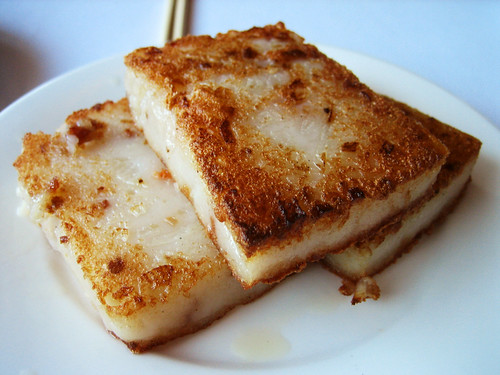
This story is narrated by a young girl. She and her family are visiting a dim sum restaurant in Chinatown. She takes you on a tour of the restaurant and shares with you what her family had to eat. She explains that dim sum is served on carts and can be found on tables as well. He mother(Ma-Ma) chooses sweet pork buns, her father (Ba-Ba) chooses fried shrimp, her siblings Jei-Jei and Mei-Mei choose turnip cakes and sweet tofu, and she chooses little egg tarts. Dim Sum is traditionally served in little dishes, and everyone tries a little bit of everything. Dim Sum can be translated to mean “touches the heart or little heart.” It originally began as an appetizer or snack served in teahouses. It soon became so popular that restaurants opened to exclusively serve Dim Sum. Dim Sum wasn’t brought over to the Western world until the 19th century. There are several cool customs that go along with Dim Sum. To thank your waiter you tap three fingers on the table, and the waiters don’t clear away dirty dishes from the table, they count them to calculate the bill.

Response and Teaching Ideas:
This was such a unique book! I would have never imagined I could learn so much about another culture in just a few short pages. It would be a great book to reader with younger children. The words are simple enough that they can practice repeating them after you, and predicting what the text will say next. The brightly colored, double page spread illustrations are also sure to draw students in. I particularity loved the picture showing the whole room filled with families all eating Dim Sum. I loved seeing that there was such a diverse crowd of people represented in her illustrations. I think it would be so neat to focus on the Chinese tradition of Tea houses and Dim Sum. You could cover the history and serve traditional food. Students could also plan their own imaginary trip to Chinatown and write about what they would see and eat.

Wednesday, April 23, 2008

The Librarian of Basra


Title:The Librarian of Basra

Author/Illustrator: Winter, Jeanette

Publisher and Date:Harcourt Inc., 2005

Genre: Multicultural, Picture Book, Biography

Age Range: 1st-5th


Summary:
This is the incredible true story of Alia Muhammad Baker. Alia is the librarian of Basra, Iraq. She loves the library and the books that it contains. It is a place for those who love books to come and “discuss matters of the world and matters of the spirit.” One day, however, things change for Alia and her beloved library. The talk in the library turns to war and the fears it is brining with it. Alia fears that all of her precious books will be destroyed. She asks the governor for permission to move them to a safe place, but he refuses. She reacts by taking as many books as she can fit in her car home from the library each night, hoping that she can keep them safe. Days pass and war turns in to a reality for Basra. Alia calls on to her friend Anis Muhammad, who owns a restaurant beside the library, for help. She asks him to help her move all the books out of the library. She, Anias, and others work all night to move all the library’s books over the seven foot wall separating the two buildings. Nine days after this, Alia’s library is burned to the ground. Finally, war moves out of the area and Alia hires a truck to move the books to a safe place. She hides thirty thousand books in her and her friend’s houses. Books are everywhere, but Alia is finally satisfied that they are safe. Alia waits for the war to end, for peace to come, and for a new library to be built.

Response:

What a wonderful, inspirational story! It could truly benefit all of our students to read this heroic tale. I am, however, not naive enough to think that everyone would accept and like this story. I’m sure this is a very controversial story to some, because of the times that we live in. Some people might not like this book because it touches on the often touchy topic of war; it has several pictures of planes, gunfire, and fires destroying cities. Some might fear that this picture book is too harsh for children to read. I disagree, however. In a time when we are at war with Iraq, it is important to see that the people of Iraq are not our enemies. They are people just like us, who enjoy the same things we enjoy, and who live lives similar to ours. They read books, hold discussions, and have fears just like we do. We need to emphasize to our students that the majority of the citizens in Iraq have done nothing wrong; they are victims caught in the crossfire of their circumstances. It is always wrong to foster hatred, anger, or prejudice against any group of people. I would love to read this story to my student so that they can hear the amazingly true and heroic story of a person who is real and who is still alive! I think it would encourage them and help them show empathy toward others who are more similar to them than they may think.

Teaching Ideas:
First, this would be a great book to incorporate into a geography or history lesson when studying Iraq. I would have my students study Alia and learn more about her and the culture, geography, and history of Iraq. Second, it would also be a great book to incorporate into a third grade social studies curriculum on heroes. This ordinary woman did something extraordinary that deserves to be remembered. She is truly inspirational to all; she proves that no matter where you’re from or what age you are, you can do amazing things! Finally, this would be a great conversation starter for any age group about war and it's consequences.


ps. be sure to check out the note from the author on the last page of the book! It contains information about how this amazing story was found and what Alia is up to now.

Sunday, April 6, 2008

Rosa

Title: Rosa
Author: Giovanni, Nikki
Illustrator: Collier, Bryan
Publisher and Date: Scholastic Inc., 2006
Genre: Biography
Age Range: 1st-5th grade
2006 Caldecott Honor Book
Recipient of the 2006 Coretta Scott King Award

Summary:
This is the amazing story of Mrs. Rosa Parks. This story takes place in Montgomery, Alabama in the year 1955. Rosa was a daughter, a wife, and the best seamstress in the town of Montgomery. One day, Rosa was allowed to go home early because of her hard work that day. She left the alteration department feeling excited about the surprising her husband with meat loaf for dinner. She paid a dime to ride the bus and then boarded the bus from the back as was the custom of the day for African Americans. She soon discovered that the black compartment was full, so she sat in the neutral compartment (a compartment for both whites and blacks). After a while the bus became full, and the driver, Mr. James Blake, ordered Rosa and her riding companion to vacate their seats so that white people could sit in them. Her companion moved, but Rosa did not. Even when the police were called and she was arrested, thoughts of injustice and inequality made her strong enough to stand up for something she knew was wrong. Word soon spread throughout the town that Rosa was arrested. When Jo Ann Robinson, a professor at Alabama State (the colored university) and new head of the Women’s Political Council, heard the news she exclaimed, “Not Mrs. Parks!” Dr. Robinson arranged for twenty-five women to meet in secret that night to make posters supporting Rosa’s bravery. These posters read, “No riders today; support Mrs. Parks-stay off the buses; walk on Monday.” The African American community took up the challenge and walked, and walked, and walked some more. People from all over the United States sent clothes and shoes so that these people could continue to walk for over a year. Dr. Martin Luther King spoke for all the people and said, “We will walk until justice runs down like water and righteousness like a mighty stream. On November 13, 1956, almost a year after Rosa Parks’s courageous stand the courts decided that segregated buses, like segregated schools, was illegal.

Response:
This book accurately portrays the quiet strength and heroic acts of Rosa Parks. Her bravery and willingness to take a stand fueled the civil rights movement that changed the lives of African Americans all over the United States. Rosa Parks is a great example for all of us. She shows us that we all can have an impact. She was a wife and seamstress, not a movie star or a politician. She proves to us that anyone can make a difference if you are willing to stand up for what you believe in. Giovanni does a great job of emphasizing this throughout the book.

The illustrations in this book also provide us with a great visual of the setting, the city, and Rosa Parks herself. The illustrations were done using watercolors and collage. Bryan Collier actually traveled to Montgomery to get a feel for the illustrations. He said the first thing he noticed was the heat; that’s why his illustrations have a yellow, dark hue to them. The heat was foreshadowing “an uneasy quiet before the storm.” I love what Collier says about his illustrations of Rosa: “In my paintings, Mrs. Parks looks as if a light is emanating from her. To me, she is like a radiant chandelier, an elegant light that illuminates all our many pathways.”

Rosa Parks like many other brave African Americans are heroes for us all. They do things that many of us would dare say is impossible. Rosa’s riding companion that day did not have the courage to stand up for himself. He left his seat, saying he didn’t want to start any trouble. If we did not have brave men and women like Rosa Parks who were willing to make a stand, who knows where we would be today? Rosa is a wonderful biography to share with students. She sets such a positive example for students. She uses quiet courage and determination, not screaming or force, to make her stand.

Teaching Ideas:
I would definitely use this book when talking about the civil rights movement or the inequality faced by African Americans all over the United Sates. I would love to have my student’s research and learn more about Rosa’s life and share these with the class. Here are some great examples of teaching tools to use with your class:


*PBS did a special series on the Civil Rights Movement. Their cite contains information about Rosa Parks, a quote by Jo Ann Robinson (a influential character in the book),a set of lesson plans for elementary teachers, and a video about the Montgomery Bus Boycott.


*Scholastic also has a page deciated to Rosa Parks, which gives a brief overview of her life and has a student's interview with Mrs. Parks.


*This site contains another interview with Rosa Parks and several video clips with Rosa and other influential Civil Rights individuals.


*This site contains a great biography of Rosa Parks and a timeline of her life.

Saturday, April 5, 2008

The Dinosaurs of Waterhouse Hawkins


Title: The Dinosaurs of Waterhouse Hawkins

Author: Kerley, Barbara

Illustrator: Selznick, Brian

Publish and Date: Scholastic Press, 2001

Genre: Biography

Age Range: 2nd-5th

2002 Caldecott Honor Book

Summary:

Can you imagine a time when no one knew what a dinosaur looked like? Until the year 1854 that was exactly the case! Benjamin Waterhouse Hawkins was a pioneer in the study of dinosaurs. He discovered his love of drawing and creating at a young age. He knew that he especially loved creating model animals, and when he became an adult he dedicated his life to researching and creating life size dinosaurs. He worked along a scientist, Richard Owen who actually coined the word “dinosaur”, to create perfect models. In 1853, Queen Victoria and Prince Albert asked him to create several dinosaurs to be displayed in England's new art and science museum, the Crystal Palace. His designs not only impressed the Queen but England’s leading scientists as well. In 1854 the Crystal Palace at Sydenham Park opened and the world was finally able to say, “So this is a dinosaur!” Waterhouse’s accomplishments did not end there however. For fourteen years he designed educational posters, created small models anyone could buy, held lectures, and created books to illustrate. And finally in 1868, Waterhouse was asked to bring his dinosaurs to America. In New York City he lectured and spoke about dinosaurs, evolution, and even dragons. Waterhouse was invited by Central Park to create a new display of dinosaurs to be housed in the Paleozoic Museum. Waterhouse worked for two years preparing new dinosaurs; he even created the first complete dinosaur skeleton (a hadrosaurus) to present to the Academy of Natural Sciences in Philadelphia. Unfortunately for Waterhouse and us, disaster struck. A corrupt politician, William “Boss” Tweed, said that this museum was a waste of money and stopped work on the museum. He even plotted to destroy all of Waterhouse’s dinosaurs. Waterhouse left New York disappointed, but still determined to give America dinosaurs. He created hadrosaurs for Princeton University in New Jersey and the Smithsonian institute In Washington, D.C. He also created another first, a series of paintings showing the development of life on earth, including dinosaurs. Waterhouse finally returned to London many years later to learn that thirty new iguanodon skeletons had been discovered. He lived his last days reflecting on his work and wondering what other surprises scientists would discover as they searched for dinosaurs.

Response:

This was such an exciting and informative book. I had actually never heard of Waterhouse Hawkins before I read this picture book. Waterhouse is such a neat man. He is one of the reasons we know what dinosaurs look like today. Adults and children alike are sure to label him “cool”! This book teaches us not only about the events of Waterhouse Hawkins’s life, but also about his choices and attitudes. The first attribute that I want to point out is that Waterhouse was a very brave man. No one had ever attempted to do what he was now pursuing; he was the very first. He had fears that he would be ridiculed and that he would not be accepted by the scientific community. He did not let his fears control him however. He worked hard, did the research, and planned a party to convince these scientists that his work was worthy of acceptance. One of my favorite stories from the book is the party scene. Waterhouse plans an elaborate party to introduce his dinosaurs to the leading scientists of England. He builds a platform, orders a tent, and hires caterers. On the night of the party all of the scientists are shocked and thrilled to learn that they will be eating out of one of Hawkins’s dinosaurs, the iguanodon. . (The front and back endpapers of the book show parts of Waterhouse’s original party invitation.) Hawkins’s creativity still amazes me. Another noteworthy quality of Waterhouse is his persistence. It was such a disappointment to me to learn that “Boss” Tweed not only shut down work on an important museum, but that he also destroyed years of Waterhouse Hawkins’s work. Waterhouse could have quit and said that life is not fair, but he pushed through his disappointment and anger and gave America the dinosaurs that he promised he would. This man is someone any child or adult could hold up as an example in their lives. One of the most vital parts of this book is the illustrations. In a picture book biography the words of the narrator are limited. What the writer can’t fit into the book though words, the picture fill in through imagination. The illustrations throughout The Dinosaurs of Waterhouse Hawkins are beautifully done. They are based on Waterhouse’s own journal, his dinosaur creations at Syndenham, and the original invitation to the iguanodon dinner. And if all the wonderful words and beautiful illustrations of this book don’t draw you in, just remember dinosaurs are such a cool thing to study. Even I, at twenty years old, am still fascinated with dinosaurs. When I took a trip to New York City this Christmas I made sure to stop and take a look at all the dinosaur skeletons housed in American Museum of Natural History. They have so many fascinating ones! Here is one of my favorite pictures I took on the trip!

Teaching Ideas:
First and foremost I need to point the phenomenal author and illustrator’s notes located in the back of the book. Please read these! They offer so much insight into the history surrounding the book and the creative process it took to create the book. Also be sure to point out exactly how Waterhouse created his dinosaurs. It's fascinating and laid out very clearly in the book! Just look for the page that looks like this:


I cannot even begin to list all the creative ways in which you could use this book. I would definitely have this book available for any biography assignments or projects. You should also use this book anytime that you are talking about dinosaurs. You could also incorporate it into a history lesson on England and Queen Victoria. A great idea would be to let your children write what it would have been like to live back in a time when dinosaurs basically did not exist. This thought process could lead to some very creative journal entries. Here is another great teaching idea that I found online: http://www.readwritethink.org/calendar/calendar_day.asp?id=254.


Thursday, March 13, 2008

Lon Po Po


Title: Lon Po Po
Author/Illustrator: Young, Ed
Publisher and Date: Penguin Putnam Books for Young Readers, 1989
Genre: Picture Book, Traditional Tale
Age Range:1st-3rd
1990 Caldecott Medal Winner

Summary:
In this very different tale of little red riding hood, the mother travels to the grandmother’s (Po Po) house and leaves her three children at home. The three girl’s names are Shang, Tao, and Paotze. She warns her children before she goes, “Remember to close the door tight at sunset and latch it well.” The crafty wolf observes her leaving and comes up with a plan to trick the children into being his dinner. He waits until dark and then knocks on the door acting like he is their Po Po. The children question him, but eventually decide to let him in. They began to realize that something isn’t quite right with their Po Po. Shang observes, “Po Po Po Po your foot has a bush on it”, when she brushes the wolf’s tail. Shang, the eldest, finally realizes what’s happening and comes up with a clever plan of her on. She lures the wolf outside with promises of a famous gingko nut that “is soft and tender, like the skin of a baby. One taste and you will live forever.” The children trick the wolf into letting them pull him up the tree in a basket so that he too can reach the gingko nuts. When the wolf is close to the top branch, the children let the basket go and the wolf falls to his death. The children go back inside to sleep safe and sound until their mother returns.

Response:
Lon Po Po is a much different version of little red riding hood. This version seemed to be a lot darker then the previous versions I had read. The inscription to the wolves on the very first page adds to this dark effect. Young thanks the wolves for allowing us to use them as our symbol of "human darkness." The illustrations also add tremendously to this dark atmosphere. Young's illustrations are done with watercolors that have been smudged to give each illustration a smoky, surreal effect. Most of the illustrations from inside the house are dark and blurry; you cannot really see what is going on clearly in any of the pictures. I think this definitely helps to give the reader a sense of suspense and dread. To me the scariest picture in the story is of the wolf lying in bed. You can only see his yellow eye staring out and the outline of his teeth. If I was a young child I would be scared to death! In most cultures, especially the Chinese culture, folktales are told to teach a lesson or moral. This story I think could have several lessons to impart to readers. The first lesson is to always listen to your elders. Their mother warned them specifically before she left to latch the door at sunset. If they had listened to her and not let anyone in the house then they would have been safe. The second lesson that I pulled from the story was that selfishness and greed never pay off. The wolf had the children literally trapped, yet he allowed them to escape because of his greed for something more (the gingko nuts). His greed also led to his death. This is a great lesson for us all. Selfishness and greed never pay off! In the end they only lead to ruin and despair.

Teaching Ideas:
This book would also be a great book to do a compare and contrast activity on. This book is much different from any book I have ever read about little red riding hood. I think it would also be neat to discuss the Chinese culture along with this book and how it played an integral role in the story! This is a very interesting read! Be sure to check it out!

Monday, March 3, 2008

Baseball Saved Us


Title: Baseball Saved Us
Author:Mochizuki, Ken
Illustrator: Lee, Dom
Publisher and Date: Lee and Low Book, Inc., 1993
Genre: Picture book, Multicultural, Historical fiction
Age Range: 1st and up

Summary:
This book is set during WWII in the year 1942; the story takes place in a Japanese American internment camp. The story is told by a young boy who is confused and upset by what is happening to him and his family. He talks about being ostracized and called names after something called Pearl Harbor happened, and then eventually one day he and his family have to move to a new place. This new place is crowded, hot during the day and cold at night, the bathrooms and cabins have no privacy, and the traditional rules of their society no longer apply. He says that this place is a camp, but its not fun “like summer camp”. The young boy’s father decides to build a baseball field to try to reunite their family and others. They plan where the bases should be, irrigate the field, build wooden bleachers, and wear uniforms sown by their mothers. At first the young boy is scared to play baseball because he always strikes out when he bats and he plays second base (supposedly the easiest position on the field). On the day of the big game however, the young boy is up to bat with two strikes. There is a runner on second and the score is 3-2 with two outs. He says he can feel the eyes of everyone on him. He glances up to see the security guard who watches them day and night and he suddenly becomes very angry. He swings with all his might at the third pitch and hits a home run to win the game for his team! The story then skips forward in time to after the war. The Japanese Americans are no longer in interment camps, but he says life is not much better. He is made fun of at school and has no one to ea lunch with. He does however still have baseball to help him fit in. On the day of another big game, he is once again up to bat. He hears someone in the crowd call him a “jap” and he is shocked and upset that people are still doing this. He sees the glare of the sun on the pitchers sunglasses and he is suddenly reminded of the guard form camp. He swings with all his might and he hits another home run!

Response:
I really liked this book! I like that it was told through the eyes of a child; it really helps you get a new perspective on the situation. Children are so vulnerable and I think this book really conveys that. The young boy gets so upset when he is ostracized at school and called a “jap”; he cannot really understand why he is being treated differently than the other children. The explanations were heart wrenching yet simple. A child can understand what is happening to this young boy and his family easily. The illustrations also helped to add emotion to the text. They were done by applying encaustic beeswax on paper, scratching out the images, and then adding oil paint for various colors. The illustrations from the camp are all kind of blurry and brown. I think this is to help the reader picture the conditions that these people were living in, because literally in the desert the wind blew the brown sand all of everything and turned it a shade of brown. After camp however to pictures change to include more colors: green for the grass and blue for the sky. One of my favorite illustrations is on the final page of the book when all of the players form his team are holding him up to celebrate. They have put aside their differences and have united together for an instant because of their love for baseball. This picture gives me hope!

Teaching Ideas:
Baseball Saved Us would be a great book to read to first grade and up. I think children on that level and above can really appreciate what is happening to this young boy and his family. They get a real look inside Japanese American interment camps and the effects it had on the Japanese people. They can understand the racism and prejudice that this young boy suffered and they can feel his hurt as people called him names like “jap.” Students can learn to empathize with this young boy and answer questions like “What would it feel like to move away form home suddenly” “What would it be like to have no privacy?” “What would you do if someone called you a name?” These are all questions that can help children see that these things really happened, and that they happened to children just like them. It would open doors to talk to my students about prejudice, discrimination, and bullying, and what we as a class can do to fix these problems. I believe children can make a difference and I would do my best to inspire my students to do so in my classroom.

Monday, February 25, 2008

The Irish Cinderlad


Title: The Irish Cinderlad
Author: Glimo, Shirley
Illustrator: Krupinski, Loretta
Publisher and Date: Harper Collins Publishers, 1996
Genre: Picture Book, Multicultural
Age Range: 1st-3rd

Summary: In this exciting story of love, friendship, and adventure our traditional Cinderella gets a new twist. The Irish Cinderlad is an Irish folktale that has been passed down from generation to generation, and was finally recorded in print in the early 1800’s. In this version Becan, the hero of the story, is born into a loving rural family. His mother loves him very much and takes good care of him. His whole life is “few of worries” until his mother suddenly dies. Becan’s father then does the unthinkable; he brings home a new stepmother and three older stepsisters to be a part of their family. Becan and his new family members do not get along so well. Becan is a very unique young boy; his feet are the size of a giant’s! His stepmother claims his gigantic feet are getting in the way and sends him out to tend the sheep. In the field, Becan comes face to face with the dreaded bull. Luckily he befriends the magical bull. The bull provides him with friendship, food, and a magic tail. Becan goes on many adventures; he defeats a giant who won’t share and a dragon who is about to devour the princess. After defeating the dragon, all Becan leaves behind is a huge boot which the princess uses to scour the land in search of her rescuer and future groom. After a year of searching the men bring the boot to Becan’s house and he and Princess Finola are wed.

Response: This is such a great story! I am such a big fairly tale fanatic that I am surprised that I had not ever heard of any Cinderlad stories before now. I think it is so neat that in this version the main character is a boy. I’m sure the boys in the class will love this, because then they can see that fairy tales are not all “girly” stories. One of my favorite parts of the book is when Becan befriends the bull. He explains to the bull that they are not all that different from each other; he says “We could be cousins, you and I, because we are patched together from the same odds and ends.” (The bull and Becan both have big “feet” and the bull’s face is covered in red freckles just like Becan’s nose is.)

This book teaches a very important lesson to young kids who are just starting to mature and grow. It shows children that it is ok to be different. In the story, Becan’s feet were very big; his sisters teased him and called him mean names like “Little Bigfoot.” In the end however, Becan’s unique foot size is what led the princess to him. We should celebrate our differences and the things that make us unique, because you never know when they might come in handy!

This book is jammed packed with heavy doses of adventure and friendship, and sprinkled with love. The pictures are detailed filled paintings that cover every page. Children of all ages are sure to enjoy this read!

Teaching Ideas: This would be a great book to read to younger children just for fun! For older children a fun activity would be to compare Grimm’s traditional Cinderella tale to The Irish Cinderlad. Students could make a chart to compare and contrast the characters, plots, setting, and ending. They could also write a journal entry about which version they liked better and why? Another fun idea would be to divide the class in half and have one half put on a skit featuring Cinderella and the other half performs a skit featuring Cinderlad. Or they could simply watch the Disney classic and one of my favorite movies, Cinderella, for a fun break one day. This could also be a fun way to study about Ireland itself. There are so many activities that you can do with this story! Just have fun with it and be creative!

Ps. Don’t forget to read the author’s note in the back of The Irish Cinderlad! It gives a lot of background information for the story!

Sunday, February 24, 2008

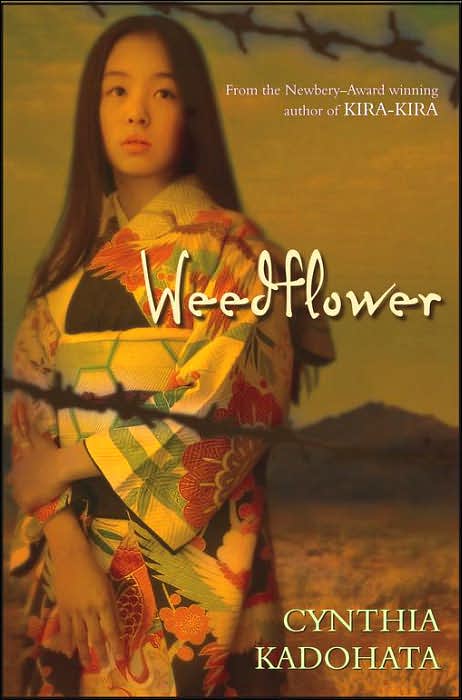
Weedflower


Title: Weed flower
Author: Kadohata, Cynthia
Publisher and Date: Atheneum Books for Young Readers, 2006
Genre: Historical Fiction, Multicultural
Age Range: 4th-6th
Jane Adams Award
PART 1
Lonliness???

Loneliness to me can mean two things. It can mean literally having no one to talk to, play with, share things with, or even just be with. It can also mean feeling alone in the midst of having those things. It can be feeling like no one notices you, cares about you, or accepts you for who you are. Either way, loneliness is an uncomfortable, sad feeling.

What are some of your best memories? How do you hold onto them?

When I think back upon my happiest memories, I think of family and friends. I think of Christmas and Santa Claus, picnics at Crowder’s Mountain, lazy days reading on the porch swing, adopting my first cat, and my surprise sixteenth birthday party with my best friends. I hold onto these things by taking time to remember them, looking at pictures, retelling old stories, watching home videos, or just by experiencing something in my day to day life that reminds me of them.

Pre-Weedflower:

I learned so much from looking at these websites. I had always had a vague notion of what happened to the Japanese people during WWII but I never had taken an in-depth look at their side of the story. Most of these people were American born citizens who were uprooted from their lives and told that they were now enemies. The pictures from the San Francisco Evacuation presentation project broke my heart. These were our people who were forced to into relocation. Another thing that struck me is that life after the war wasn’t that much better for the Japanese Americans. The “Japanese Internment Camps and Their Effects” website specifically talked about how some could not move back into their old homes, they had trouble finding jobs, they were still shunned, and some did not ever recover form the trauma of it at all! What a big price we pay for racism!

ch.1-15

What a sad story! But at the same time what a powerful message it contains! Sumiko is the kind of character who can really make this awful situation come alive for kids. She and her family are so lovable. She loves her family, every member, and she has such a passion for their family flower business. She is not your typical child; she works hard and studies hard. I cannot imagine taking on all the responsibilities she performs as a child. She is in charge of grading the flowers, cooking, cleaning, and heating the bathwater! Tak- Tak and Jiichan are probably my two other favorite characters from the book so far. Tak-Tak is just adorable! His love of “Baba, crickets, goo and bad smells” immediately endeared him to me. He is what I would imagine a typical younger brother to be like, curious about life and protective of his older sister. Jiichan is what I would imagine any good grandfather to be like. He loves Sumiko so much; he tries to teach her the ways of their people and pass on his entire rich cultural heritage to her. Can’t you just imagine the good stories he could tell! With each line of the story you just become closer to Sumiko and her family. You grow so close to Sumiko’s character that when she is being ripped from her family, friends, and home you feel as if it’s happening to you as well.
Parts of this book made me laugh out loud! Especially when Jiichan talks to others through the outhouse doors! This is one of my favorite parts of the book so far; Bull is trying to cheer Sumiko up after her bad party experience: “She followed his gaze and saw Uncle standing in the moonlight near the outhouse, talking to it and occasionally gesturing with his arms. Whenever Sumiko saw someone talking to the outhouse, she always knew exactly where Jiichan was.” Kids will absolutely love this part of the book! Parts of the books also made me very sad. The birthday party chapter especially. I cannot imagine inviting a child to a party and then telling a CHILD that she cannot really attend because of her skin color. This is just one example of the cruelty the Japanese people were facing at this time. I was also very upset when her Uncle and Jiichan were taken away without much of a goodbye. I cannot imagine being separated from my dad, not knowing where he was going or whether or not I would ever see him again. Emotions run high in this book; I think children can appreciate that. Children always seem to sense when something is wrong even before adults do. As a teacher I would ask kids to respond to both of these situations in a journal entry. I would encourage them to talk about how they would feel if something like this happened to them.
One thing that I noticed that I found very odd was that the Japanese Americans and the Native Americans did not get along too well. I guess I expected that both could empathize with the other. They definitely did the opposite however; the Native American boys were spying on the Japanese Americans claiming that all Japanese were farmers and wasteful (pg. 121-122) and complaining that they needed to get off their land, and the Japanese American girl warned Sumiko that the Native American boys were scalpers who would also cut off their fingers to boil (pg.122). I think this is very interesting; even in the mist of experiencing racism and prejudices both groups lashed out with racism and prejudice toward each other!
There is so much more of this book to go. I cannot wait to see if Sumiko befriends the Indian boys, if their family is finally reunited, or if they reach “ultimate boredom” as Jiichan calls it. Ill guess I’ll just have to keep reading and find out!
PART 2
ch.16-33

The second half of Weedflower just flew by for me! I could not seem to put it down. One of my favorite parts early in the second half is when Jiichan sends Sumiko paper to write him a letter on. Her uncle writes, “Oh and Jiichan says to send you the enclosed blank sheet of paper. He says there must be a paper shortage in Poston, since you are using old newspapers to write on. He says I wonder where your Aunt is getting the blank paper that she writes to us on.” (pg.137) I just love this part of the book because it gives the reader a chance to laugh in such a sad book.
The Japanese gardens touched my heart. I love how Sumiko took such great care of her garden and worked so hard to get it to flourish in the middle of the desert. I think the gardens that the Japanese Americans built represent the Japanese people well. They were forced into the desert against their will yet they found ways to survive and flourish in a place where most of us would think it impossible. They worked hard and against the odds to make a place that was not even their permanent home beautiful. The line on page 235 sums this up well, "Together the Japanese had made the desert bloom." The Japanese Americans persevered and survived. This is a lesson that children and adults alike should take to heart.
One of my favorite parts in the second half of Weedflower is the relationship that forms between Sumiko and Frank. They remind me so much of Vera and Alfred in the Aleutian Sparrow. They are such unlikely friends and yet they are the best kind of friend to one another. You can tell that both of them really care about the other. Sumiko takes an extra cup of ice every time she goes out into the bean field just in case she sees Frank. Frank talks about Sumiko to his brother calling her pretty and giving her the nickname “Weedflower.” And at the end of the story Frank urges Sumiko to leave the camp because he knows that it is what is best for her. I was inwardly torn during this part. It is so hard to give a friend or a loved one up; I do not know if I would have the same courage that Frank had to tell her to go. One of the most powerful parts of the book is when Frank tells Sumiko that his brother has been killed in battle in the Pacific. Sumiko and Frank both realize that Japanese soldiers killed his brother, and Sumiko feels so guilty for this. This is just an unbelievably sad part of the book. No child should have to bear this kind of burden.
The relationship between Sumiko and Tak-Tak was also very touching. Sumiko and Tak-Tak’s relationship reminded me so much of the relationship Bo and Prosper had in The Thief Lord. Sumiko loves her brother so much and does her very best to take care of him. She always tucks him every night and removes his glasses for him to make him as comfortable as he can be.
The ending of the book slightly disappointed me; I was left craving more. What happened to Sumiko? Did she eventually get to open up her flower shop? Did the family ever get reunited? Did Bull and Ichiro make it back safely form war? This are questions that I really wanted answer to!
All in all, I would definitely use this book in my classroom. This story provides such a stark example of racism and prejudice in our great nation’s history. It gives us such an immense opportunity to discuss this with our students. Sumiko and Frank give us such a real example to build on; what if we all were as brave as Sumiko and fought for our friends and for those other people consider inferior or different. I loved it when Sumiko stood up for Frank when the other children were literally beating him because he was different. This same scenario has happened to various groups of people from the Jews, the Aleutians, and the Japanese. We need to make our students understand that these are real people whose lives were dramatically changed. None of these people did anything wrong or in any way deserved this; they simply dealt with the prejudices of their times.
Racism is such a real thing and it still exists today. Anytime that you hear a comment or joke being made about someone’s looks or heritage, that is racism in action. As future teachers we need to take the initiative to stop this kind of thing from happening in our own lives; anytime we hear a relative, friend, or even a stranger make a racist comment we need to call them out on it. People are people, regardless of their skin color, eye color, height, or age. We all share common emotions, thoughts, and experiences that bind us together. We all experience love, death, and even birthdays, we need to start focusing on what we have in common rather than we do not. This applies to our future classrooms as well. If we don’t make the everyday change in our lives and in our classrooms, than how can we expect to make a global change? And if we don’t make a global change, if we don’t stand up for others and put a stop to this senseless judging of others, than who knows what’s next.

check out these websites:
http://library.thinkquest.org/TQ0312008/http://americanhistory.si.edu/perfectunion/experience/index.html
http://www.sfmuseum.org/hist8/ppoint.html
http://pbskids.org/wayback/fair/fighters/fighters_01_1.html
http://memory.loc.gov/learn/lessons/99/fear/intro.htmlhttp://teachers.henrico.k12.va.us/specialist/franceslively/lessons/grade6/bracelet6.htm
http://www.leeandlow.com/teachers/guide1.html
http://www.pbs.org/wgbh/amex/eyesontheprize/tguide/elem.html
http://www.kimskorner4teachertalk.com/readingliterature/genres/historical/baseball_saved_us.htm
http://www.pbs.org/childofcamp/index.html
http://home.igc.org/~japa/index.html
http://www.passingposton.com/
Curicular Connections:

Monday, February 18, 2008

Aleutian Sparrow


Title: Aleutian Sparrow
Author: Hesse, Karen C.
Publisher and Date: Aladdin Paperbacks, 2005
Genre: Historical Fiction, Realistic Fiction, Multicultural
Age Range: 4th-6th


Pre-reading:
When I began to explore the websites about the Aleutian people I was overcome with an odd mixture of sadness and anger. My sadness resulted from learning about the horrible things that were done to the Aleutian people. They were first attacked by the Japanese army and then forced to relocate to an area that is comparable to a third world country. They had one suitcase of belongings, no electricity, no running water, and no hope of returning home to their previous lives (their houses and churches were burned). My anger resulted from a combination of the fact that we as American citizens never knew that this went on in our own country and the fact that this was just such an unjust thing to do! I could not imagine what it would be like to go from living your normal everyday life with all the amenities and comforts of the time, to being forced to move to a destitute place and watching all your belongings, everything you’ve worked for, disappear into the flames. It must have been heartbreaking. The Aleutian people not only suffered in material ways, but they also lost many of their friends and family because of illness. The website said that with the loss of the old they lost their history and tradition and with the loss of the young they lost their future. Somehow the Aleutian people were able to push through and survive against all odds; It makes me wonder if my family and I would be able to be so brave .


This is a quote that I think sums up the sense of loss the Aleutians suffered:"In 1942, my wife and our four children were whipped away from our home...all our possessions were left...for mother nature to destroy...I tried to pretend it really ws a dream and this could not happen to me and my dear family. "--Bill Tcheripanoff, Sr., Akutan Aleut Evacuee


After reading the Aleutian Sparrow:
Wow! What a powerful book! The reader is drawn into the fascinating world of the Aleutian people, and gets to experience the sorrow, anger, and disbelief along with the Aleutians. Our guide through this story is an amazing girl named Vera. I loved Vera; she continues to amaze me even now (days after I have finished the book). She is one of those characters whose story and plight can haunt you for a lifetime. Her attitude and positive outlook throughout the book inspired me. Vera went through so much; she was uprooted from her home, her own mother abandoned her, and her best friend (Pari) and surrogate parents (the Golodofs) died in exile. If any body had cause to despair she did; yet, through all of this Vera continues to help others. She got a job at a laundry mat to earn money, she told stories to the younger children, and she and Pari made a gigantic star to help decorate for Christmas. It makes me wonder if I could do the same if I was put into her situation.


The writing style of the Aleutian Sparrow is also very unique; I have never read anything like it. I think the brevity of the book and the diary like entries adds intensity to the book. The reader hangs on to every word Vera writes because there are so few words written. The entries are so beautifully written; they have a poetic quality that makes you just want to read them over and over again. The imagery in the passages also amazes me; one of my favorite lines is on page 58. Vera is describing the rising sun on her way to Ketchikan. She says, “My spirit rises with the sun, which parts the fingers of trees and slides its light through to the forest floor.” I think it is important to note that the brevity of the entries does not take away anything from the book; the reader still gets a full sense of the events that are occurring and their impact on the Aleutian people.


The story of the Aleutian people reminds me of two other groups of people who have also been mistreated, judged, and abandoned by the majority of their countrymen. The first group is the Jewish people. These people suffered in atrocious ways. They were ripped out their homes and communities and sent to work or “death camps”. One book from this era that particularly touched me is The Diary of Anne Frank. This book had so many similarities to the Aleutian Sparrow. Both groups of people lack medical care and amenities such as suitable bathrooms and food, Anne falls in love with Peter just as Vera falls in love with Alfred, and Anne and Vera both experience unspeakable heartaches and hardships. The second group is the African Americans. This one hits home for us. Americans mistreated these people so badly. We forced them to work for no wages, we ripped them away form their “homes” on a whim, and we often separated them from their husbands and children. The cruelty that was afflicted on them is unbelievable to me. Once again, just like in the case of the Aleutians, Americans were responsible for this.


I found two particularly sad facts in the book that I want to share. The first is that German POW’s were treated better then our own US citizens. On page 56 Vera explains that, “they are well fed…..they have cots and blankets, every last one….good sanitation and an infirmary….a variety of foods and recreation.” I cannot comprehend why we would do this for our ENEMY but not for our own people. The second is that not only did the government abandon then, their own countrymen did too. Vera talks about the people of Ketchikan and their disdain of the Aleutian people. How they want them moved away from them. One passage in particular that caught my attention is on page 124. It reads, “We are called undesirables and told we must leave Ward Lake….we are called a menace and told to leave.”


When teaching this book to children, I think it is important to stress that this story is fictional but the experience is not. This really happened to the Aleutian people. Hesse’s author note (pg. 154-155) in the final pages of her book gives a very understandable synopsis of the events that occurred between 1942 and 1945.The Aleutian websites are also good way to teach this topic. The documentary mentioned in the http://www.aleutstory.tv/ website would be a great way to show children a visual representation of what happened. There are several topics I would want to address with this book. I would have them perform the exercise that we did in class last week. We listed all of our favorite things and imagined each one being taken away. It was a very powerful illustration. This would help the children to gain perspective about what it would be like to be an Aleutian. I would also have them imagine that they were the ones who were sending the Aleutians away into exile. I would want them to be able to see and talk about both sides of the story.


Like we talked in about in class last week, I think it is very important to realize that prejudice, unfairness, and abuse exists in our society. I want my future classroom to be a place where we discuss those issues and try to find ways that we as a whole will not participate in those types of things. A child CAN develop empathy for others. I am one of those few people who have had a great life so far. I have been raised in a loving home with both of my parents present, gone to private schools, and lived in the same house since birth. I have never experienced anything close to what the Aleutians did, but I can empathize with them and all children can learn to do that as well. We all are interconnected; we all have common emotions and experiences that can be the building blocks that lead us to have empathy for others.
check out these websites to learn more about the Aleutian people:

Monday, February 4, 2008


Title: MOSES: When Harriet Tubman Led Her People to Freedom
Author: Weatherford, Carole Boston
Illustrator: Nelson, Kadir
Publisher and Date: Hyperion Books for Children, 2006
Genre: Picture Book, Multicultural, Historical Fiction
Age Range: 2nd grade and up
2006 Caldecott Honor Book
2006 Coretta Scott King Award Winner


Summary:
This book tells the amazing story of Harriet Tubman and her journey to freedom. Harriet Tubman was born into slavery, but later in her life she felt God's call for her to escape. She heeded His call and trusted Him for every part of her journey. She finally made it Philadelphia after a long hard journey. She used her time there to learn about the Underground Railroad and to help runaway slaves. She was happy to be free, but she still felt a burden for her enslaved family and friends. She felt God calling her to be a "MOSES" for her people. Harriet Tubman agreed and made nineteen trips back and forth from the North to the South rescuing slaves and through it all she gave glory to God.


Response:
I LOVED this book! Every time I read a story about slavery, it saddens and amazes. Harriet Tubman was such an amazing person. She had a strong faith in God and He helped her to do things that many people thought were impossible. This book absolutely captivated me. The story and the illustrations are so powerful. I thought it was really neat that author used three different types of text throughout the story; she used one for the narrator, one for Harriet, and one for God. When God spoke the text was large and seemed to float across the page. I think this was a great touch, because God was her refuge, her bigger than life protector, who she could not see but who she felt was with her every step of her journey.


The words of the story were powerful themselves but the illustrations added intensity to the book. The reader could see, feel, hear, and touch everything that Harriet Tubman experienced through these illustrations. The illustrations were beautifully painted double page spreads that seemed endless. The words and the illustrations meshed so perfectly together. One of my favorite pictures in the book is the on the last page of the book. The picture is simply of Harriet Tubman with a bright blue background. She looks so content and strong; the text simply reads, "Well done, Moses, well done." Harriet lived her life with courage and faith that was both astounding and inspiring. The amazing story and the breathtaking illustrations combine to make this book worthy of many honors.


Teaching Ideas:
This book is a great introduction to the topic of slavery. Not only does it tell the amazing story of Harriet Tubman but also includes other important aspects of slave culture with songs such as "swing low sweet chariot" and the mention of the Underground Railroad. This book could be combined with other great books about slavery such as picture books, novels, and non fiction books. Some great examples of these books are Sweet Clara and the Freedom Quilt, The Slave Dancer, and One More River to Cross: An African American Photograph Album. These great books could be used along with Moses: When Harriet Tubman Led Her People to Freedom to compare and contrast the stories and mediums used to tell the stories.