Showing posts with label Picture Book. Show all posts

Wednesday, March 23, 2011

The House


Title:
The House
Author:
J. Patrick Lewis
Illustrator:
Roberto Innocenti
Publisher:
Creative Editions, 2009
Genre:
Picture Book, Poetry
Age Range:
2nd and up


Summary and Response:


This is the "House of twenty thousand tales...." Built in 1656, this house has seen it all-marriage, birth, death, and even war. It has been deserted and remclaimed over the centuries of it's life. The book begins with the story of the house in 1900. In the century that the book covers, the house bears witness to many, many events and goes through some major changes.


Although the text seems on the surface to be simplistic, Lewis' quatrains have a depth and complexity that the oldest of readers will appreciate. The book is written from the perspecitive of the house, which I feel gives it a very unique perspective that is suprisingly poignant.

Innocent's illustrations are (as usual) fantastic. The illustrations that he has created for this book have the feel of a classic painting, and are oh so detailed. You can literally spend an hour peering into one of his double page spreads and still not notice everything. Innocenti includes a small illustration that correpsonds with the text on the opposite page, and follows each quatrain with the amazing double page spreads that I have just mentioned.


It was fascinating to notice not only the changes to the house through the century, but also the changes of the house's inhabitants as well.

Teaching Ideas:

This book is an example of high quality and complex poetry that would be an excellent example for both the teaching of poetry (especially quatrains or I-poetry) and also perspective and voice.


Check out Seven Impossible Things Before Breakfast for another excellent review of this book.


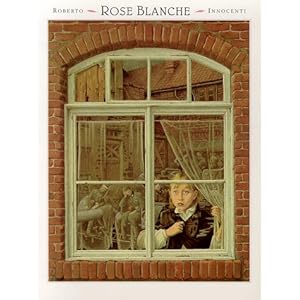
Rose Blanche


Title:
Rose Blanche
Author:
Roberto Innocenti and Christophe Gallaz
Illustrator:
Roberto Innocenti
Publisher:
Creative Editions, 1985
Genre:
Picture Book, Historical Fiction
Age Range:
2nd grade and up

Summary:


Rose Blanche is a young girl who is living in Germany during the time of WWII. Things have changed in her town; trucks rumble past carrying soldiers to unknown destinations. Rose Blanche is curious about all of these changes. One day Rose witnesses a little boy trying to escape from one of the trucks that always pass by. The young boy looked frightened; his escape was stopped by the Mayor and he was roughly returned to the truck. At this point, the story begins to change. Rose decides to follow the truck with the young boy.

What she discovers is a terrible place where men, women, and children are trapped behind a high electric, barbed wire fence. After this discovery, Rose begins conducting her own secret trips out of town to this mysterious, terrible place. Rose gives all of the food she can carry to these strangers in striped clothes wearing yellow stars. For these unknown people she is willing to sacrifice her safety and comfort, often going hungry herself.


Time passes and changes come to Rose's town again. New soldiers come and the people of the town flee. Rose Blanche, however, is nowhere to be found. Rose has gone on her mission. Rose soon discovers that town is not the only thing that has changed.


Response:

This is such a powerful, haunting book. One most powerful parts of the book is the illustrations. Innocenti tells an unwritten story through the details in his illustrations; a story that the reader must pay careful attention to as he or she turns each page of the text. The book begins with color and celebration; Rose blanch wears a red bow in her hair and proudly holds a Nazi flag. Once Rose encounters the young boy in the truck, you will notice that color in Rose's bow and in the pages of the book begins to fade. Toward the end of the text, the reader can see that Rose is no longer wearing her bow. I think this symbolizes her recognition of the Nazi party's role in these unknown people's fate and her defiance and courage to help these people. Rose's appearance also begins to change during the course of the book; her facial expressions now show sadness and worry where before she wore a smile. Rose's figure has also begun to change; she is becoming more and more gaunt as the story progresses.

The final pages of the book are again in color; the end of the darkness has come and life can begin anew. On the right hand side of the page, Innocenti includes a cross of sorts; I believe that this picture is symbolic of Rose's sacrifice.

Also, pay close attention to the narration throughout the text and you will notice that halfway through the text it switches. At the beginning of the text, Rose is our narrator (first person narration). After she discovers the camp, the narration switches to third person. This switch is important because it shifts the focus from Rose (a focus on herself) to a focus on others.

As you can see there are so many things to notice about this moving text!


Teaching Ideas:


In addition to reading the text for Rose Blanche, you MUST read the author's note that is included on the book jacket. It gives background on Innocenti's life and into the character of Rose Blanch. Did you know that Rose Blanche was named after a group of German citizens who protested the war? Eventually all of them were forced to give up their lives for their cause. You can read more about their story here.


Here are some other child friendly resources on the Holocaust.


http://library.thinkquest.org/CR0215466/the_holocaust.htm


http://library.thinkquest.org/07aug/00117/holocaust.html


http://library.thinkquest.org/05aug/00331/Camps.htm


I used Rose Blanche in connection to the novel The Guardians of Ga'Hoole: The Capture. You can check out connections between these two texts and explore the rest this unit here.

Erika's Story


Title:
Erika's Story
Author:
Ruth Vander Zee
Illustrator:
Roberto Innocenti
Publisher:
Creative Editions, 2003
Genre:
Picture Book, Informational Text
Age Range:
2nd and up

Summary:

Erika doesn't know her real name, her age, or the makeup or her family. The only thing she knows for sure is that on her mother's way to death, she threw her to life. Erika's family was Jewish and like so many of the Jewish people during the Holocaust,her family was mistreated and misled. Erika imagines her final days with her family. Their sadness at being forced from their home into a ghetto filled with misery and sickness. The twinge of hope they must have felt when they were told that they were to be relocated. Would this relocation be to a better place? The packed cattle car in which her parent's realization of where they were headed ultimately saved her life. It was on this train ride to death that her mother gave her life. She threw Erika from the train. Erika was taken to a kind woman who named her, raised her, and risked her life to keep her.

Response:
Although this true story is laced with sadness, it's message of hope is still able to shine through. In the midst of death and despair, a life was saved. Through a combination of extordinary circumstances Erika was saved and was able to live, marry, and have children and grandchildren of her own. When so many of the yellow star's light went out, hers continued to shine. This book is just phenomenal. It's sparing text tells the story of the horror and hope that existed side by side in those tragic years of the Holocaust. Roberto Innocenti has created stunning artwork to accompany this extrodinary story. Erika's story in pictures is told in grim shades of gray that are only relieved when Erika's mother tosses her from the train. Through a glimspe of her pink blanket on the gray background we are able to feel a glimspe of hope for her survival. The final illustration shows Erika as a young girl in a world full or color. The gray has lifted, and life (and color) have begun anew. The illustrations at the beginning of the text are haunting. The gray backgound highlights the shining yellow stars on the clothing of the Jewish people. The significance of these stars are further shown on the last page of the book, where the author has included a powerful line of text, "My star still shines."

Teaching Ideas:
This true story would be a powerful addition to any unit on WW II or the Holocaust. Be sure to notice the author's note at the beginning of the book. In this note, Ruth Vander Zee tells her story of how this story came to be.

Check out this Teaching Guide created by Ruth Vander Zee.

Thursday, March 10, 2011

A Sick Day for Amos McGee


Title: A Sick Day for Amos McGee
Author: Philip C. Stead
Illustrator: Erin E. Stead
Publisher: Roaring Brook Press, 2010
Genre: Fiction, Picture Book
Age Range: All ages
Awards:Cadecott Medal (2011)

Summary: Amos McGee is a lovable zookeeper who always makes time for his zoo animal friends. One day however, Amos McGee does not show up to the zoo and all of his friends are worried. They discover that Amos McGee is sick and all band together to take care of Amos in the same way in which he cares for them.


Response: This is a "feel good" read through and through! Not only are the illustrations stunning, but the simplistic text is suprisingly moving as well. The theme of friendship shines in this book! Philip Steads use of repetition in the text is another noteworthy feature. This repetition of ideas can help even the youngest reader to hang onto the text.

Check out the Wall Street Journal's interview with illustrator Erin E. Stead:

http://blogs.wsj.com/speakeasy/2011/01/14/caldecott-winner-erin-e-stead-on-a-sick-day-for-amos-mcgee/

Can you beleive she's only 28! WOW!

Monday, March 2, 2009

Text Talk Lesson Plan

A text talk lesson plan is a lesson plan that focuses on helping students connect with and understand the story that they are reading. It focuses more on the text of a story and less on the illustrations and asks higher order thinking questions as well as questions that ask students to make predictions throughout the story. The lesson also includes a section where students learn certain vocabulary words mentioned in the story and check their understanding of these words in several contexts. It is a great way to keep students engaged in a read aloud and to check for comprehension and listening skills.

Here is an example of a text talk lesson plan created for the book, Sheila Rae The Brave:

Title: Sheila Rae The Brave
Author/Illustrator: Henkes, Kevin
Publisher and Date:Penguin Group, 1987
Genre:Picture Book
Age Range:K-2nd


Text Talk Lesson Plan:


Vocabulary: Sheila Rae, The Brave

(Page 10) Fearless: Sheila Rae was skipping, and she started to sing, “I am brave, I am fearless.” (Fearless means to be brave and calm in a scary or dangerous situation.) “Say fearless.”

What would be fearless…..
Taking a bath or Petting a shark
Eating ice cream or Going to the dentist
Getting a shot at the doctor or Playing at the park with your mom

“What’s our word?”


(Page 17) Convince: Sheila Rae is lost in the woods and she ties to convince herself that she is brave and fearless. (Convince means to make yourself or someone else believe something that you say.) “Say convince.”

Would you try to convince……
Your mother or your fish
Your dog or your friend
Your teacher or your cat

“What’s our word?”


(Page 26) Dash: When Sheila Rae saw her house through the trees, she grabbed Louise and they dashed home. (Dash means to move quickly or fast.) “Say dash.”

Which things could dash?
Your brother or a turtle
A cheetah or a slug
A caterpillar or your cousin

“What’s our word?”


Review: fearless, convince, and dash:
--Would making friends at a new school or watching a movie with your family be fearless.
--If you tried to convince someone what would you be doing?
--Would your dog or your turtle be more likely to dash to the house?


Text Talk Questions and Possible Answers:
Sheila Rae, The Brave

•(Page 5) What’s going on here?
-she giggled at the principal
-she tied her classmate up with a jump rope
•(Page 5) Why does she do these things?
-she’s brave
•(Page 9) What is happening now?
-She’s being mean to her sister
-She’s walking home a new way
•(Page 13) What are some things Sheila Rae does to be “fearless”?
-stepping on cracks
-walking backwards with her eyes closed
-growling at stray dogs
•(Page 19) What’s the big problem here?
-She’s lost
-She’s all alone
-She’s sad
•(Page 19) How do you think Sheila Rae feels right now?
-She’s sad
-She’s crying
-She’s scared
•(Page 21) What just happened?
-Sheila Rae was found by her sister Louise and Louise knows the way home
•(Page 24) What did we just find out here?
-Louise can do everything Sheila Rae can do
-Louise is copying her sister
•(Page 27) What just happened?
-they made it home
•(Page 27) How do you think Sheila Rae feels now?
-happy
-safe
-excited
•(Page 28) What do you think Sheila Rae learned from getting lost?
-not to walk home alone
-to be nicer to her sister
-she needs help from others sometimes
-other people can be fearless too

Wednesday, February 25, 2009

The Rainbow Tulip


Title: The Rainbow Tulip
Author:
Pat Mora
Illustrator:
Elizabeth Sayles
Publisher and Date:
(Viking) Published by Penguin Group, 1999
Genre: Multicultural, Picture Book
Age
Range
: K-2nd


Summary:


Stella is not your average first grader. She is a little uncertain of herself and very special to those around her. Stella notices that she is not like all of her neighbors, friends, or even her teacher. Her family is rather quiet, her mother wears simple long dresses and no makeup, and her parents speak only Spanish. Stella’s mother and father came to the Untied State’s from Mexico and have kept and shared their cultural heritage with Stella and her siblings. Most of the time, her differences from her classmates and others do not bother Stella, but during the May Day parade her differences are highlighted. Stella’s teacher tells the class that they will be able to participate in the school’s May Day Parade and the girls will be able to design and wear their own tulip costumes. Stella is beyond excited; she immediately begins to plan her tulip costume. She loves bright colors and plans for her tulip costume to be a celebration of all of her favorite bright colors.

Stella gets up early on parade day and dresses with care, but when she arrives at school, her confidence falters. All of the other girls are not dressed like her. She is wearing a bright multicolor outfit, while the other girls have monochromatic outfits. Stella suddenly becomes quiet, even when her friends and teacher assure her she looks great. The parade begins and Stella spots her family. She decides that she must be brave for her family and executes her part in the May pole dance perfectly. She is even able to help her classmates with their dances. Her teacher commends her and her parents clap and clap. Later, Stella and her mother talk about the day she has had. Stella says, “I liked being the only rainbow tulip, but it was hard too.” Her mother responds, “It’s hard to be different; It’s sweet and sour like sherbet.” Stella is different, yet she still has a place, and that place is as needed and special as she is. It is very true that different is beautiful!


Response:


This is such a great multicultural book to share with children. I think it gives children a look into the Hispanic culture that is on their level, and that they can understand. It shows them how being different and celebrating your heritage is sometimes hard, but it is ultimately a very rewarding thing to do. This would be such an encouraging book for children whose parents or grandparents came to the Untied States from another country. Stella knows that her family is different, yet she is still proud of them and realizes that their differences are part of what makes them special to her. This would actually be a great book for all children, because it gives them a realistic look into the life of a girl around their own age. It allows them to see that cultural differences can be a great thing. Stella was able to share her individuality with her class, and actually helped her classmates through the May Day dance. Another important feature of the book that is useful for both adults and children to learn is the need for us all to work together. Stella says in the beginning of the book that she wishes her mother would learn English and at the end of the book she wishes her teacher knew Spanish. I think that this is the author's clever way of prompting us to think of ways we can help each other out in our culturally diverse world. It truly does take everyone to make diversity beneficial to all.

Teaching Ideas:

I think this would be a great book to share with Kindergartners when studying families. This book can be read to the students, and then the students can discuss what they liked about Stella and her family. They can also talk about their own families and ways that Stella’s family was the same or different from their family. It is a great thing for children to see at a young age that we all have families of some sort, whether or not our family’s culture, speech, or dress is different, we all have that common bond.

Tuesday, April 29, 2008

The Egyptian Cinderella


Title: The Egyptian Cinderella
Author: Climo, Shirley
Illustrator: Heller, Ruth
Publisher and Date: Crowell Books, 1989
Genre: Picture Book, Multicultural, Traditional Tale
Age Range: K-5th

Summary:
Rhodopis is a young slave girl in the land of Egypt. She is noticeably different from the other servant girls (she has green eyes, light hair, and rosy sun kissed skin, while the Egyptian servant girls have brown eyes, dark hair, and copper skin.) and often gets teased and left out. They would often make her do their chores when their master wasn’t watching. The only solace Rhodopis found was in her animal friends and dancing. She would often dance after her daily chores were through, her feet moving across the earth as nimbly as a goddess. One day her master caught sight of her dancing, and to reward her for her beautiful dance he gave her a pair of rose red slippers. This made the other servant girls even more jealous of Rhodopis and they piled so many chores on her that she often felt too tired to dance. One especially cruel thing that her fellow servants did was to exclude from going to meet the Pharaoh. While she is doing her chores, however, a falcon comes and snatches one of her slippers away and delivers it to the Pharaoh. Believing it is the will of the gods that he marries the girl that the slipper fits; he sets out to find her. When he finally arrives at Rhodopis’ house, she hides in the reeds. Pharaoh spots her and makes her try on the slipper and it fits! She then produces the other shoe to match! When the other servant girls cruelly exclaim that she is not even Egyptian, the Pharaoh kindly says that her eyes are green like the Nile, her hair is feathery like papyrus, and her skin is pink like a lotus flower. Her physical beauty reflects the beauty of Egypt!

Response and Teaching Ideas:
I absolutely loved reading all the different versions of the Cinderella .I would love to read as many versions as possible so that I can introduce them all in my classroom someday. I think it is important for students from other cultures to see that their culture is being represented in the classroom. These Cinderella stories would be a great way to do so. One thing that struck me as different in this story is that Rhodopis is teased and treated cruelly by her fellow servant girls not stepsisters or a stepmother. Also, there is no magical element to this story. No fairy godmother or magical fish bones are there to save the day. The story does have elements similar to other Cinderella tales however. She is sought by a royal man to try on a shoe so that he can marry her. This story also, thankfully, has a happy ending like most Cinderella versions. I would love for my students to explore this and other versions of Cinderella and create a creative Venn diagram and an I-POEM. I think that both of these activities help students think critically about what they are reading and make each book more memorable. Be sure to check out the Egyptian Cinderella and other great Cinderella tales!

Monday, April 28, 2008

Sitti's Secrets


Title: Sitti’s Secrets
Author: Nye, Naomi Shihab
Illustrator: Carpenter, Nancy
Publisher and Date: Aladdin Paperbacks, 1994
Genre: Picture Book, Multicultural
Age Range: K-3rd

Summary:
This is the story a young girl and her grandmother. She and her grandmother live very far apart; she lives in the United States, while her grandmother lives in Palestine. When it is time for her to go to bed, her Grandmother is just getting up. During the story, she recounts her very first visit to her grandmother’s home in Palestine. She talks about the difference in their languages, but how this allowed them to come up with their own special language. She called her grandmother, Sitti, which means Grandmother in Arabic, and her grandmother called her Habibi which means darling. During her visit, she and her grandmother were inseparable; they got milk from a real cow, watched men pick lentils in the field, made meals together, and combed her Grandmother’s long, striped hair. Her Grandmother’s hair was usually hidden under a scarf, so when her Grandmother let her see and fix it, she felt like she knew a secret. When it was time for her and her father to leave, everyone cried and hugged and her Grandmother gave her a beautiful handmade purse. When she returned to the United States she wrote a letter to the President telling him about her Grandmother and asking for peace. (I think it is important to touch on the continuing conflict between Isreal and Palestine.)

Response:
This is such a touching story! Every child should have a great relationship with their grandmother. I love how they were both able to share parts of their culture with each other even though they didn’t speak the same language. Sitti showed her Habibi how she hangs the laundry out to dry on the rooftop and how the women walk to get water in the afternoon. She teaches her how to make bread and how to serve lemonade with the fruit grown on her own lemon tree. A Grandmother’s love and life lessons are universal and timeless. This is a common thread that ties readers to this unique and heartfelt tale. I had such a great relationship with my Grandmother; she taught me how to make my coffee the “right” way, to make Spaghetti, and to make up beds and fluff pillows. I love the way Nancy Carpenter states this in her illustrator’s note. She say, “What I discovered in my research….is a culture so very different from my own, with traditions that go back hundreds of years. Mona’s Sitti, especially comes form a time and a place where people have been wearing the same style of clothes, eating the same food, planting the same crops, and living on the same land for centuries. I live in a culture where people get a new spring wardrobe every year, change their hairstyle every few months, and eat various ethnic foods every night of the week. What I CAN relate to in this story is universal-enjoying a sunny day and lemonade, playing games with friends, loving the smell of fresh baked bread, and knowing the special bond between Grandparent and child.” This is such an important mindset to have; we need to look for similarities, not differences when we encounter someone who is a different nationality from our own. We are more alike than we may think. Also make sure to pay special attention to the illustrations in this book. They are beautifully painted to reveal the true colors of the desert and to depict the closeness of a grandparent-grandchild bond.


Teaching Ideas:
This would be a great book to read with Kindergarteners when they are studying about families. They can see that families come in all shapes, sizes, and nationalities. Another great idea would be to have students read Sitti’s Secrets and then write five similarities that they share with her. This would be a good way to show the universality of this tale.

Thursday, April 24, 2008

Dim Sum for Everyone


Title: Dim Sum for Everyone
Author/ Illustrator: Lin, Grace
Publisher and Date:Alfred A. Knopf, 2001
Genre:Multicultural, Picture Book
Age Range:k-2nd


Summary:
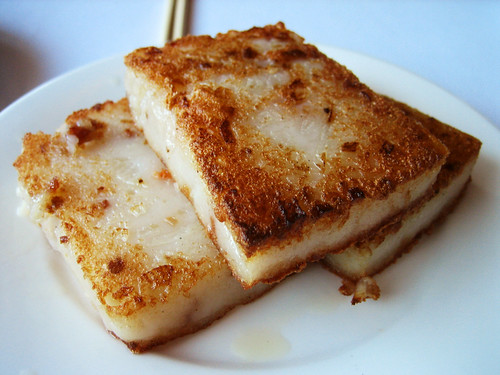
This story is narrated by a young girl. She and her family are visiting a dim sum restaurant in Chinatown. She takes you on a tour of the restaurant and shares with you what her family had to eat. She explains that dim sum is served on carts and can be found on tables as well. He mother(Ma-Ma) chooses sweet pork buns, her father (Ba-Ba) chooses fried shrimp, her siblings Jei-Jei and Mei-Mei choose turnip cakes and sweet tofu, and she chooses little egg tarts. Dim Sum is traditionally served in little dishes, and everyone tries a little bit of everything. Dim Sum can be translated to mean “touches the heart or little heart.” It originally began as an appetizer or snack served in teahouses. It soon became so popular that restaurants opened to exclusively serve Dim Sum. Dim Sum wasn’t brought over to the Western world until the 19th century. There are several cool customs that go along with Dim Sum. To thank your waiter you tap three fingers on the table, and the waiters don’t clear away dirty dishes from the table, they count them to calculate the bill.

Response and Teaching Ideas:
This was such a unique book! I would have never imagined I could learn so much about another culture in just a few short pages. It would be a great book to reader with younger children. The words are simple enough that they can practice repeating them after you, and predicting what the text will say next. The brightly colored, double page spread illustrations are also sure to draw students in. I particularity loved the picture showing the whole room filled with families all eating Dim Sum. I loved seeing that there was such a diverse crowd of people represented in her illustrations. I think it would be so neat to focus on the Chinese tradition of Tea houses and Dim Sum. You could cover the history and serve traditional food. Students could also plan their own imaginary trip to Chinatown and write about what they would see and eat.

Wednesday, April 23, 2008

The Librarian of Basra


Title:The Librarian of Basra

Author/Illustrator: Winter, Jeanette

Publisher and Date:Harcourt Inc., 2005

Genre: Multicultural, Picture Book, Biography

Age Range: 1st-5th


Summary:
This is the incredible true story of Alia Muhammad Baker. Alia is the librarian of Basra, Iraq. She loves the library and the books that it contains. It is a place for those who love books to come and “discuss matters of the world and matters of the spirit.” One day, however, things change for Alia and her beloved library. The talk in the library turns to war and the fears it is brining with it. Alia fears that all of her precious books will be destroyed. She asks the governor for permission to move them to a safe place, but he refuses. She reacts by taking as many books as she can fit in her car home from the library each night, hoping that she can keep them safe. Days pass and war turns in to a reality for Basra. Alia calls on to her friend Anis Muhammad, who owns a restaurant beside the library, for help. She asks him to help her move all the books out of the library. She, Anias, and others work all night to move all the library’s books over the seven foot wall separating the two buildings. Nine days after this, Alia’s library is burned to the ground. Finally, war moves out of the area and Alia hires a truck to move the books to a safe place. She hides thirty thousand books in her and her friend’s houses. Books are everywhere, but Alia is finally satisfied that they are safe. Alia waits for the war to end, for peace to come, and for a new library to be built.

Response:

What a wonderful, inspirational story! It could truly benefit all of our students to read this heroic tale. I am, however, not naive enough to think that everyone would accept and like this story. I’m sure this is a very controversial story to some, because of the times that we live in. Some people might not like this book because it touches on the often touchy topic of war; it has several pictures of planes, gunfire, and fires destroying cities. Some might fear that this picture book is too harsh for children to read. I disagree, however. In a time when we are at war with Iraq, it is important to see that the people of Iraq are not our enemies. They are people just like us, who enjoy the same things we enjoy, and who live lives similar to ours. They read books, hold discussions, and have fears just like we do. We need to emphasize to our students that the majority of the citizens in Iraq have done nothing wrong; they are victims caught in the crossfire of their circumstances. It is always wrong to foster hatred, anger, or prejudice against any group of people. I would love to read this story to my student so that they can hear the amazingly true and heroic story of a person who is real and who is still alive! I think it would encourage them and help them show empathy toward others who are more similar to them than they may think.

Teaching Ideas:
First, this would be a great book to incorporate into a geography or history lesson when studying Iraq. I would have my students study Alia and learn more about her and the culture, geography, and history of Iraq. Second, it would also be a great book to incorporate into a third grade social studies curriculum on heroes. This ordinary woman did something extraordinary that deserves to be remembered. She is truly inspirational to all; she proves that no matter where you’re from or what age you are, you can do amazing things! Finally, this would be a great conversation starter for any age group about war and it's consequences.


ps. be sure to check out the note from the author on the last page of the book! It contains information about how this amazing story was found and what Alia is up to now.

Saturday, March 15, 2008

Bad Day at Riverbend


Title: Bad Day at Riverbend
Author/Illustrator: Allsburg, Chris Van
Publisher and Date: Houghton Mifflin Company, 1995
Genre: Picture Book, Fantasy
Age Range: K-2nd

Summary:
Riverbend is a quiet little town where hardly anything ever happens. One day however, everything changes. A mysterious “shiny, greasy slime” appears all over a coachman, his horses, and his coach. Soon the mysterious substance has spread to cover townspeople, cattle, and buildings. Sheriff Ned Hardy takes it upon himself to investigate this mystery. The only clue they have is that a bright light appears right before everything becomes covered in slime. At the end of the story the reader discovers the “shiny, greasy slime” are actually crayon scribbles and that Riverbend is located in a Wild West coloring book!

Response:
This book is so cool! The illustrations in this book are what truly set it apart. Chris Van Allsburg used computer images and crayons to create his unique illustrations. At first glance I actually thought a young child had colored in the book and “ruined” the illustrations. When I read the book, however, I figured out that these marks were an integral part of the story. One of my favorite pictures in the book is when the sheriff and his men discover the stick figure the child has drawn. They describe him as skinny as a broomstick and tall as a tree, and they actually think that he is the culprit of the mysterious marks! This book is a great read! It will keep children of ages entertained the entire way through the book. One of my favorite things about this book is that it does not have a set ending. The reader has to infer what has happened and decide an ending on his/her own. I love this because it allows the reader to think and to be creative!

Teaching Ideas:
I would definitely read this book in my classroom! It is such a fun story! Every child can relate to this story; I know I can! As a child I would color for hours and hours. So I thought it would be neat to let my students have a chance to color in class. A great teaching idea would be to give every child in the class a picture from a different coloring book and allow them to come up with their own story based on this picture. Then they could color the picture and share their picture and story with the class. I also love these lessons that Houghton Mifflin has come up with. Be sure to check them out!

Monday, February 18, 2008

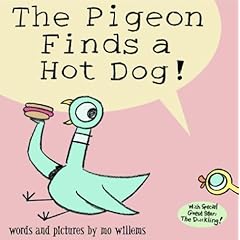
The Pigeon Finds a Hotdog


Title: The Pigeon Finds a Hotdog
Author/Illustrator: Willems, Mo
Publisher and Date: Hyperion Books for Children, 2004
Genre: Picture Book
Age Range: K-2

Summary: In this book pigeon is so excited that he finds a hotdog! He is about to put the “taste sensation” in his mouth when all of a sudden a curious young duckling arrives. Each time he is about to take a bite, the duckling asks a question. The pigeon gets so upset; he pitches fit and does not know what to do. The ducking has an idea and the reader turns the page to discover that they have decided to split the hotdog.

Response: This book was so great! The illustrations are hilarious you can see and read the emotions of the pigeon! The text goes along with each illustration. For example when the pigeon gets really annoyed with the duckling, the illustration shows him flying about with his eyes wide open and spit flying from his mouth, while the text is written in big bold yellow tainted letters that read: “IT JUST TASTES LIKE A HOTDOG, OKAY!?” Any child would be enthralled with the pigeon! The book is very readable for children of all ages!

Teaching Ideas: This is such a funny book with some great lessons for kids! One important lesson this book teaches is sharing. The pigeon wanted to eat the hotdog all by himself, but he felt guilty about not sharing with the duckling. In the end he did the right thing and compromised by splitting the hotdog in half. We need to stress to children that we may not always like to share with others, but when we do it make everybody happy!

Don't Let the Pigeon Drive the Bus!


Title: Don’t Let the Pigeon Drive the Bus!
Author/Illustrator: Willems, Mo
Publisher and Date: Hyperion Books for Children, 2003
Genre: Picture Book
Age: K-2
2004 Caldecott Honor Book

Summary: In this book you are in charge! The bus driver has to leave his bus alone for a while and asks you to watch it. He gives you only one word of caution: Don’t let the pigeon drive the bus! As a soon as he leaves the pigeon shows up and begs you in every way possible to let him drive the bus! Fortunately you do not give in and the bus driver returns to a safe and sound bus. The story ends with the pigeon spotting his next target a freightliner!

Response: I loved this book! I thought it was neat that Mo actively involved the reader throughout the entire story. The pigeons convincing was so funny; it would have the reader laughing the entire time ……”Ill be your best friend, I’ll give you 5 bucks, I bet your mom would let me, I have dreams you know, its just a bus, what’s the big deal, fine!, no fair!, ect.” You had to be on guard for the tricks, convincing, and games ( lets play drive the bus…Ill go first) the pigeon tried to pull, but good job! You didn’t let him drive the bus!

Teaching ideas: This is such a fun book to read! You could read it to a group of children just about any time of the day! It would be a great way to caution children to always be aware of the “games” people will try to play with you, and if you give your word to someone always keep it (just like we promised the bus driver we would not let the pigeon drive the bus).

Monday, February 11, 2008

Julius..The Baby of the World


Title: Julius: The Baby of the World
Author/Illustrator: Henkes, Kevin
Publisher and Date: Greenwillow Books, 1990
Genre: Picture Book, Animal Fantasy
Age Range: K-2

Summary: In this hilarious book Lilly and her family have just had a new addition to her family, her brother Julius. Julius is affectionately called “the baby of the world” by her parents, but Lilly affectionately refers to him as “disgusting.” Lilly’s parents adore Julius and praise every action that he does, even gurgling and blowing bubbles. Lilly however, sees nothing spectacular about her new baby brother and wishes that he would leave. She does everything she can to upset him; she ignores him, scares him, and tries to confuse him by repeating the alphabet mixed up. One day her family decides to throw a celebration in honor of Julius and cousin Garland makes the mistake of calling Julius “disgusting.” Lilly takes up for her brother and from then on everyone, especially Lilly, consider Julius “the baby of the world.”

Response: This was such a good story! Most kids would relate very well to this story, because most have either had a sibling brought into the family or feared that one day soon there parents would bring one in. Many children, especially younger children, fear that their parents will like their brother or sister better then them or that they will be forgotten altogether. When I was in first grade my mom told me that I was going to have a little sister. I was absolutely mortified. Up until that point I had been the youngest and the most spoiled princess in the family. I just could not comprehend having to share some of my attention with yet another sister! Like, Lilly I pouted and sulked trying to draw attention to myself in any way possible. Finally though I realized just like Lilly that my sister was family and that everyone had a special place in our family. I love how Lilly becomes the protective older big sister in the last few pages of the book. It is so true that we can pick on our siblings, but others cannot. The ending of the book wraps things up perfectly; “JULIUS IS THE BABY OF THE WORLD!” And from then on, he was. In everyone’s opinion. Especially in Lilly’s.” We have to be patient with our family and learn just like Lilly and I did that everyone has a place and no one is more important than anyone else. Lilly’s parents tried to stress this to her earlier in the book when they told her that they wanted Julius to be as clever and as beautiful as her, but she had to believe them in her own time.

Teaching Ideas: This would be a great book to read to any age group. The illustrations and added text would have them cracking up and empathizing with Lilly the whole way through. A good activity to pair with this book would be to have the children write a diary entry about a hard time they have experienced with their family. They can even draw pictures to help them express their emotions.

I would definitely encourage you to read more of Kevin Henkes hysterically funny, yet didactic books!

Saturday, February 9, 2008

Kitten's First Full Moon


Title: Kitten’s First Full Moon
Author/Illustrator: Henkes, Kevin
Publisher and Date: Green willow Books, 2004
Genre: Picture Book
Age Range: K-2
2005 Caldecott Medal Winner


Summary: It’s Kitten’s first full moon and she is a little confused about what exactly a full moon is. She mistakenly thinks that the full moon is a full bowl of milk. She tries to lick it, chase it, jump on it, and climb a tree to reach it, but nothing works. Exhausted, hungry, and sad kitten returns home to find a full bowl of milk waiting for her on the porch outside.

Response: I immediately fell in love with this book! Kitten was so adorable yet so determined! Through her action she teaches readers to have persistence. She did everything she could to reach “the bowl of milk” in the sky, and only when she exhausted all of her options did she finally give up! I have two cats and I know the great lengths they will go to for their food! Henkes did a great job of making this book simple yet believable. Young readers will especially love the simple, sometimes repetitive text coupled with the gouache and colored pencil illustrations. The final page of the book is probably my favorite. Kitten looks so satisfied and happy with her full bowl of milk.

Teaching Ideas: This would be a great book to read with young children. Some of the pages asked questions that kids would jump to answer. For example, the page where kitten is stuck up in the tree asks, “what could she do?’ Kids would have the best time hypothesizing what kitten should do next. Young children could also read the repetitive phrases in the book along with you. For example, they could repeat with you, “Still, there was the little bowl of milk, just waiting.” Older children could write their own story about a kitten using this book as a guide.

Friday, February 8, 2008

Lilly's Big Day


Title: Lilly’s Big Day
Author/Illustrator: Henkes, Kevin
Publisher and Date: Greenwillow Books, 2006
Genre: Picture Book, Animal Fantasy
Age Range: K-2

Summary: Lilly is back and in this book she has another plan up her sleeve. Mr. Slinger, her favorite teacher in the world has just decided that he is going to marry the school nurse, Mrs. Shotwell, and Lilly is determined that is going to be the flower girl! Lilly practices and practices, and drops not so subtle hints to Mr. Slinger about wanting to be his flower girl. Mr. Slinger finally pulls Lily aside and informs her that unfortunately his niece, Ginger, is going to be the flower girl, but that she can have the super important extra special job of being the flower girl’s assistant. Lilly tries to make the best of her role and on the big day she gets the surprise of her life! Ginger, the real flower girl, is too scared to walk down the aisle so Lilly picks her up and carries her down. Lilly achieves her dream, saves the big day, and gains new friend in the process!

Response: This is such a great book! It contains so many valuable lessons for children. One is to have a good attitude about every situation. Lilly was very disappointed that she did not get to be the flower girl, but she made the best of her situation and in the end she was rewarded. Another great lesson is to be open to new opportunities. Lilly was uncertain about how she would feel about the actual flower girl, Ginger, but in the end they became best friends. A great lesson for adults is to be sensitive to children’s needs. Mr. Slinger knew how disappointed Lilly was not to be able to be the flower girl, but he gave her an important job to make her feel just as special and needed. Just like its prequel, Lilly’s Purple Plastic Purse, the illustrations made the reader laugh and learn. They were so expressive that the reader feels like they in the story. One of my favorite pages on the story is when Lilly prances back and forth practicing her flower girl walk. The reader really gets a sense of her excitement and determination.
There is a great quote in the book jacket of Lilly's Big Day that I wanted to share: " In all children's literature there is just a handful of characters we think of as family-Madeline, Winnie the Pooh, and Charolette come to mind-and when the young generation is old enough to reflect on the ones it loved, Lilly will probably lead the pack."-The New York Times Book Review This quote is so true! Lilly is such a fun, memorable that she will be talked about for generations to come!

Teaching Ideas: This is a great book to read to kids any time of the day. You could read it during free time or at the end of the day. It is a fun story that will have kids laughing and learning all in one! This would even be a great book to read for older elementary school children (2nd and up). You could read the story to them and have them write a short story about a time when something unexpected happened to them. It's a fun way to help them practice creative writing.

Lilly's Purple Plastic Purse


Title: Lilly’s Purple Plastic Purse
Author/Illustrator: Henkes, Kevin
Publisher and Date: Greenwillow Books, 1996
Genre: Picture Book, Animal Fantasy
Age Range: K-2

Summary: This book focuses on a cute mouse named Lilly. Lilly loves school; she loves pencils, chalk, her “private” desk, and most all her teacher, Mr. Slinger. Lilly tries to emulate everything that Mr. Slinger does in class and is so inspired by him that she decides she wants to become a teacher too. One day, however, everything changes. Lilly had the most exciting new things to show her class: a purple plastic purse, three shiny quarters, and shiny plastic shades. She is so anxious to show her new prizes off that she gets into trouble and Mr. Slinger has to take her items away. Lilly is furious and draws a mean picture of Mr. Slinger to get back at him. Mr. Slinger however writes Lilly a nice note about how her day will better tomorrow. Lilly ends up apologizing to Mr. Slinger and learns how to share her prizes with the class in an appropriate way.

Response:
I loved this book! It would be very difficult to read this book and not love it! Lilly is just such a delightful character. You can just feel and see her childlike excitement throughout the book. Lilly is just like any young child; she is enthralled by anything new and exciting and cannot wait to share her discoveries with those around her. She also a very fickle character; one day she wants to be an ambulance driver and a diva, and the next day she decides she wants to be a teacher. This is part of what makes childhood so much; you get to discover new careers and have fun experiences without the pressure of having to make a choice right now.

The illustrations in this book are half the fun! They are done using black pen and watercolor paints. Each page is full of pictures that show you exactly what Lilly is doing and even thinking. I love the extra text Kevin puts above each picture. It adds to the story by letting the reader get inside Lilly’s head; young children will love this because they are getting to read someone’s private thoughts! The actual text works well with the pictures as well. One of my favorite pages in the book is when Lilly is handing her “I’m sorry” card and present to Mr. Slinger and the profuse apologies trail down the page until they get the picture. The reader really gets a sense of the seriousness of her apology.

Teaching Ideas: I cannot wait to read this book in my classroom one day. I’m sure all my students will love Lilly just as much as I did! She ends up being a great example of how to share things the right way in class, and of how to handle anger and disappointment in the classroom. These two things are likely to come up in any classroom and young students can learn how NOT to handle these situations in a fun way! The way Lilly eventually handles her problems and resolves her dilemmas will have you and your students clapping by the end of the story!

Here are two great lesson plans to check out:
http://www.readwritethink.org/lessons/lesson_view.asp?id=932

http://www.nancypolette.com/LitGuides/lilyspur.pdf

Be sure to check out more of Kevin Henkes works!!!!

Tuesday, February 5, 2008

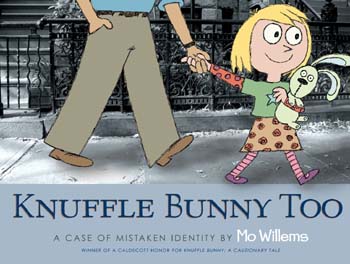
Knuffle Bunny Too


Title: Knuffle Bunny Too: A Case of Mistaken Identity
Author/Illustrator: Willems, Mo
Publisher and Date: Hyperion Books for Children, 2007
Genre: Picture Book
Age Range: K and up
2008 Caldecott Honor Book


Summary:
The story begins with a young girl named Trixie who is on her way to school. Trixie is especially excited about school toady because she gets to show off her one of a kind knuffle bunny to the class. When she arrives at school however, she realizes that another girl, Sonja, has a knuffle bunny too. The girls spend the day arguing and eventually get their knuffle bunnies taken away. When the knuffle bunnies are returned to the girls, they are accidentally switched! The girls both discover the mistake in the middle of the night and meet to return the bunnies. They decide to become best friends and the next day at school they cannot wait to share their knuffle bunnies with each other.


Response:
This is such a cute story with such a great message. In elementary school a child's worst fear is showing up at school with the same show and tell toy as another child; In middle and high school the fear changes to showing up at school in the same outfit (at least for girls). We want to be seen as individuals and we do not want to have to share any part of our identity with others. I think Mo Willems did a great job of capturing this side of children. He also does a great job at of showing children that it is ok to have the same toy or the same outfit as someone else. These similarities are what can make us closer to one another; in the story Trixie and Sonja's mutual love of knuffle bunnies led them to be best friends. I also think it is great that Mo Willems portrays the parents of Trixie and Sonja in such a positive light; these parents are willing to wake up at 2:30 am to exchange knuffle bunnies! Parents often do not realize how much something like this means to a child.


The illustrations in the book were captivating. They were quite different from anything that I have ever seen in a picture book. The media used was Sepia photographs combined with hand drawn ink sketches shaded digitally. These illustrations gave the book a unique touch. The real photographs helped to remind the readers that this book is based on a true story, and the hand drawn sketches added an element of humor that often had me cracking up as I turned the pages.


Teaching Ideas:
I really liked this book and I cannot wait to read it to my class one day! This would be a good book to read to K-2nd graders before their first show and tell day to introduce the concept of sharing and how to be a good friend.It would also just be a fun book to read out loud with your kids at the end of the day to help them unwind. I know that I thoroughly enjoyed Trixie's faces and antics!
*Do not forget to check out the prequel to Knuffle Bunny Too: A Case of Mistaken Identity.....Knuffle Bunny: A Cautionary Tale!*