Tuesday, February 26, 2008

My Tooth is About to Fall Out


Title: My Tooth is About to Fall Out
Author: Maccarone, Grace
Illustrator: Lewin, Betsy
Publisher and Date: Scholastic, Inc., 1995
Genre: Realistic Fiction, Informational
Age Range: K-1st

Summary:
In this book a young girl talks to the reader about her fears of losing her first tooth. She takes the reader through all the scenarios she does not want to happen; such as her tooth falling out while she is playing, swimming, or eating. She is so worried about her tooth falling out that she barley notices when it finally does fall out! She then talks to the reader about the difference between baby teeth and permanent teeth, what happens when you loose a tooth, and how she can now stick her tongue through a hole in her mouth! The book ends with a more positive outlook on losing teeth; she is no longer to scared to lose a tooth because she cannot wait to see how great her new “big teeth” will look.

Response:

This was such a cute book! There are so many good qualities to this book that I am unsure of where to begin. This book covers an important topic for young children. All children have a big fear about losing their first tooth (or I know at least I did). They are unsure of what to expect; they imagine all sorts of horrible things will happen to them. Some scenarios I have heard kids discuss are: “what if I swallow my tooth?” and “what if a new tooth never grows back?” This book answers all of these questions in an informational yet fun way! Kids no longer have to wonder what losing a tooth will be like; they can read this book and find out for themselves. Another great thing about this book is that it involves the reader throughout the entire story; the young girl is talking to you personally and telling you all about her fears of losing a tooth. I also like how the pictures in the book directly follow along with the text. This is great book for beginning readers, because if they forget some of the words they are trying to read they can look at the pictures for a hint. One of my favorite pictures was when the little girl holds up a drawing of herself missing a tooth. This is just such a cute realistic picture, because can’t you just imagine a child drawing this picture for you?

Teaching Ideas:
First of all, this would be a great book to assign to first graders for reading practice. Not only is it a fun read, but it also teaches kids a lot. Also, this is definitely a book I would use when addressing the topic of losing teeth. I have been in many elementary school classrooms and seen a lot of lost teeth posters (For example the teacher has a tooth with each child’s name on it and she puts a star on the tooth each time that child loses a tooth.); this would be a great book to read when introducing that to the class.

Here’s another great teaching idea from Scholastic that you could also try!

Monday, February 25, 2008

The Irish Cinderlad


Title: The Irish Cinderlad
Author: Glimo, Shirley
Illustrator: Krupinski, Loretta
Publisher and Date: Harper Collins Publishers, 1996
Genre: Picture Book, Multicultural
Age Range: 1st-3rd

Summary: In this exciting story of love, friendship, and adventure our traditional Cinderella gets a new twist. The Irish Cinderlad is an Irish folktale that has been passed down from generation to generation, and was finally recorded in print in the early 1800’s. In this version Becan, the hero of the story, is born into a loving rural family. His mother loves him very much and takes good care of him. His whole life is “few of worries” until his mother suddenly dies. Becan’s father then does the unthinkable; he brings home a new stepmother and three older stepsisters to be a part of their family. Becan and his new family members do not get along so well. Becan is a very unique young boy; his feet are the size of a giant’s! His stepmother claims his gigantic feet are getting in the way and sends him out to tend the sheep. In the field, Becan comes face to face with the dreaded bull. Luckily he befriends the magical bull. The bull provides him with friendship, food, and a magic tail. Becan goes on many adventures; he defeats a giant who won’t share and a dragon who is about to devour the princess. After defeating the dragon, all Becan leaves behind is a huge boot which the princess uses to scour the land in search of her rescuer and future groom. After a year of searching the men bring the boot to Becan’s house and he and Princess Finola are wed.

Response: This is such a great story! I am such a big fairly tale fanatic that I am surprised that I had not ever heard of any Cinderlad stories before now. I think it is so neat that in this version the main character is a boy. I’m sure the boys in the class will love this, because then they can see that fairy tales are not all “girly” stories. One of my favorite parts of the book is when Becan befriends the bull. He explains to the bull that they are not all that different from each other; he says “We could be cousins, you and I, because we are patched together from the same odds and ends.” (The bull and Becan both have big “feet” and the bull’s face is covered in red freckles just like Becan’s nose is.)

This book teaches a very important lesson to young kids who are just starting to mature and grow. It shows children that it is ok to be different. In the story, Becan’s feet were very big; his sisters teased him and called him mean names like “Little Bigfoot.” In the end however, Becan’s unique foot size is what led the princess to him. We should celebrate our differences and the things that make us unique, because you never know when they might come in handy!

This book is jammed packed with heavy doses of adventure and friendship, and sprinkled with love. The pictures are detailed filled paintings that cover every page. Children of all ages are sure to enjoy this read!

Teaching Ideas: This would be a great book to read to younger children just for fun! For older children a fun activity would be to compare Grimm’s traditional Cinderella tale to The Irish Cinderlad. Students could make a chart to compare and contrast the characters, plots, setting, and ending. They could also write a journal entry about which version they liked better and why? Another fun idea would be to divide the class in half and have one half put on a skit featuring Cinderella and the other half performs a skit featuring Cinderlad. Or they could simply watch the Disney classic and one of my favorite movies, Cinderella, for a fun break one day. This could also be a fun way to study about Ireland itself. There are so many activities that you can do with this story! Just have fun with it and be creative!

Ps. Don’t forget to read the author’s note in the back of The Irish Cinderlad! It gives a lot of background information for the story!

Sunday, February 24, 2008

Weedflower


Title: Weed flower
Author: Kadohata, Cynthia
Publisher and Date: Atheneum Books for Young Readers, 2006
Genre: Historical Fiction, Multicultural
Age Range: 4th-6th
Jane Adams Award
PART 1
Lonliness???

Loneliness to me can mean two things. It can mean literally having no one to talk to, play with, share things with, or even just be with. It can also mean feeling alone in the midst of having those things. It can be feeling like no one notices you, cares about you, or accepts you for who you are. Either way, loneliness is an uncomfortable, sad feeling.

What are some of your best memories? How do you hold onto them?

When I think back upon my happiest memories, I think of family and friends. I think of Christmas and Santa Claus, picnics at Crowder’s Mountain, lazy days reading on the porch swing, adopting my first cat, and my surprise sixteenth birthday party with my best friends. I hold onto these things by taking time to remember them, looking at pictures, retelling old stories, watching home videos, or just by experiencing something in my day to day life that reminds me of them.

Pre-Weedflower:

I learned so much from looking at these websites. I had always had a vague notion of what happened to the Japanese people during WWII but I never had taken an in-depth look at their side of the story. Most of these people were American born citizens who were uprooted from their lives and told that they were now enemies. The pictures from the San Francisco Evacuation presentation project broke my heart. These were our people who were forced to into relocation. Another thing that struck me is that life after the war wasn’t that much better for the Japanese Americans. The “Japanese Internment Camps and Their Effects” website specifically talked about how some could not move back into their old homes, they had trouble finding jobs, they were still shunned, and some did not ever recover form the trauma of it at all! What a big price we pay for racism!

ch.1-15

What a sad story! But at the same time what a powerful message it contains! Sumiko is the kind of character who can really make this awful situation come alive for kids. She and her family are so lovable. She loves her family, every member, and she has such a passion for their family flower business. She is not your typical child; she works hard and studies hard. I cannot imagine taking on all the responsibilities she performs as a child. She is in charge of grading the flowers, cooking, cleaning, and heating the bathwater! Tak- Tak and Jiichan are probably my two other favorite characters from the book so far. Tak-Tak is just adorable! His love of “Baba, crickets, goo and bad smells” immediately endeared him to me. He is what I would imagine a typical younger brother to be like, curious about life and protective of his older sister. Jiichan is what I would imagine any good grandfather to be like. He loves Sumiko so much; he tries to teach her the ways of their people and pass on his entire rich cultural heritage to her. Can’t you just imagine the good stories he could tell! With each line of the story you just become closer to Sumiko and her family. You grow so close to Sumiko’s character that when she is being ripped from her family, friends, and home you feel as if it’s happening to you as well.
Parts of this book made me laugh out loud! Especially when Jiichan talks to others through the outhouse doors! This is one of my favorite parts of the book so far; Bull is trying to cheer Sumiko up after her bad party experience: “She followed his gaze and saw Uncle standing in the moonlight near the outhouse, talking to it and occasionally gesturing with his arms. Whenever Sumiko saw someone talking to the outhouse, she always knew exactly where Jiichan was.” Kids will absolutely love this part of the book! Parts of the books also made me very sad. The birthday party chapter especially. I cannot imagine inviting a child to a party and then telling a CHILD that she cannot really attend because of her skin color. This is just one example of the cruelty the Japanese people were facing at this time. I was also very upset when her Uncle and Jiichan were taken away without much of a goodbye. I cannot imagine being separated from my dad, not knowing where he was going or whether or not I would ever see him again. Emotions run high in this book; I think children can appreciate that. Children always seem to sense when something is wrong even before adults do. As a teacher I would ask kids to respond to both of these situations in a journal entry. I would encourage them to talk about how they would feel if something like this happened to them.
One thing that I noticed that I found very odd was that the Japanese Americans and the Native Americans did not get along too well. I guess I expected that both could empathize with the other. They definitely did the opposite however; the Native American boys were spying on the Japanese Americans claiming that all Japanese were farmers and wasteful (pg. 121-122) and complaining that they needed to get off their land, and the Japanese American girl warned Sumiko that the Native American boys were scalpers who would also cut off their fingers to boil (pg.122). I think this is very interesting; even in the mist of experiencing racism and prejudices both groups lashed out with racism and prejudice toward each other!
There is so much more of this book to go. I cannot wait to see if Sumiko befriends the Indian boys, if their family is finally reunited, or if they reach “ultimate boredom” as Jiichan calls it. Ill guess I’ll just have to keep reading and find out!
PART 2
ch.16-33

The second half of Weedflower just flew by for me! I could not seem to put it down. One of my favorite parts early in the second half is when Jiichan sends Sumiko paper to write him a letter on. Her uncle writes, “Oh and Jiichan says to send you the enclosed blank sheet of paper. He says there must be a paper shortage in Poston, since you are using old newspapers to write on. He says I wonder where your Aunt is getting the blank paper that she writes to us on.” (pg.137) I just love this part of the book because it gives the reader a chance to laugh in such a sad book.
The Japanese gardens touched my heart. I love how Sumiko took such great care of her garden and worked so hard to get it to flourish in the middle of the desert. I think the gardens that the Japanese Americans built represent the Japanese people well. They were forced into the desert against their will yet they found ways to survive and flourish in a place where most of us would think it impossible. They worked hard and against the odds to make a place that was not even their permanent home beautiful. The line on page 235 sums this up well, "Together the Japanese had made the desert bloom." The Japanese Americans persevered and survived. This is a lesson that children and adults alike should take to heart.
One of my favorite parts in the second half of Weedflower is the relationship that forms between Sumiko and Frank. They remind me so much of Vera and Alfred in the Aleutian Sparrow. They are such unlikely friends and yet they are the best kind of friend to one another. You can tell that both of them really care about the other. Sumiko takes an extra cup of ice every time she goes out into the bean field just in case she sees Frank. Frank talks about Sumiko to his brother calling her pretty and giving her the nickname “Weedflower.” And at the end of the story Frank urges Sumiko to leave the camp because he knows that it is what is best for her. I was inwardly torn during this part. It is so hard to give a friend or a loved one up; I do not know if I would have the same courage that Frank had to tell her to go. One of the most powerful parts of the book is when Frank tells Sumiko that his brother has been killed in battle in the Pacific. Sumiko and Frank both realize that Japanese soldiers killed his brother, and Sumiko feels so guilty for this. This is just an unbelievably sad part of the book. No child should have to bear this kind of burden.
The relationship between Sumiko and Tak-Tak was also very touching. Sumiko and Tak-Tak’s relationship reminded me so much of the relationship Bo and Prosper had in The Thief Lord. Sumiko loves her brother so much and does her very best to take care of him. She always tucks him every night and removes his glasses for him to make him as comfortable as he can be.
The ending of the book slightly disappointed me; I was left craving more. What happened to Sumiko? Did she eventually get to open up her flower shop? Did the family ever get reunited? Did Bull and Ichiro make it back safely form war? This are questions that I really wanted answer to!
All in all, I would definitely use this book in my classroom. This story provides such a stark example of racism and prejudice in our great nation’s history. It gives us such an immense opportunity to discuss this with our students. Sumiko and Frank give us such a real example to build on; what if we all were as brave as Sumiko and fought for our friends and for those other people consider inferior or different. I loved it when Sumiko stood up for Frank when the other children were literally beating him because he was different. This same scenario has happened to various groups of people from the Jews, the Aleutians, and the Japanese. We need to make our students understand that these are real people whose lives were dramatically changed. None of these people did anything wrong or in any way deserved this; they simply dealt with the prejudices of their times.
Racism is such a real thing and it still exists today. Anytime that you hear a comment or joke being made about someone’s looks or heritage, that is racism in action. As future teachers we need to take the initiative to stop this kind of thing from happening in our own lives; anytime we hear a relative, friend, or even a stranger make a racist comment we need to call them out on it. People are people, regardless of their skin color, eye color, height, or age. We all share common emotions, thoughts, and experiences that bind us together. We all experience love, death, and even birthdays, we need to start focusing on what we have in common rather than we do not. This applies to our future classrooms as well. If we don’t make the everyday change in our lives and in our classrooms, than how can we expect to make a global change? And if we don’t make a global change, if we don’t stand up for others and put a stop to this senseless judging of others, than who knows what’s next.

check out these websites:
http://library.thinkquest.org/TQ0312008/http://americanhistory.si.edu/perfectunion/experience/index.html
http://www.sfmuseum.org/hist8/ppoint.html
http://pbskids.org/wayback/fair/fighters/fighters_01_1.html
http://memory.loc.gov/learn/lessons/99/fear/intro.htmlhttp://teachers.henrico.k12.va.us/specialist/franceslively/lessons/grade6/bracelet6.htm
http://www.leeandlow.com/teachers/guide1.html
http://www.pbs.org/wgbh/amex/eyesontheprize/tguide/elem.html
http://www.kimskorner4teachertalk.com/readingliterature/genres/historical/baseball_saved_us.htm
http://www.pbs.org/childofcamp/index.html
http://home.igc.org/~japa/index.html
http://www.passingposton.com/
Curicular Connections:

Thursday, February 21, 2008

Bridge to Terabithia


Title: Bridge to Terabithia
Author: Patterson, Katherine
Illustrator: Diamond, Donna
Publisher and Date: Scholastic Inc., 1977
Genre: Realistic Fiction
Age Range: 4th-6th grade
1978 Newberry Medal Winner

Summary:
This book tells the wonderful story of two best friends, Jess Aarons and Leslie Burke. Jess is a lonely ten-year-old boy whose only ambition for the upcoming school year is to be the fattest runner in school. Leslie is also lonely; she is the new girl in town and Jess’s new neighbor. It takes a while, but both of them finally decide that they would make perfect friends. From that point on they are inseparable. They spend their schooldays in the same class, their recesses talking together, and their afternoons in their own magical world of Terabithia. Terabithia is a magical place just for the two of them. Here they can escape from their real and imaginary enemies (Mrs. Meyers their teacher, Janice Avery the school bully, and Jess’s annoying four sisters). Jess could not imagine a more perfect friend than Leslie. She encourages his creativity and imagination and accepts him just the way he is. She teaches him stories and pushes him to the limits of his fears. Unexpectedly tragedy strikes; Jess returns home form a “perfect” day with his music teacher, Miss Edmunds, to discover that Leslie has drowned on her way to Terabithia. Jess experiences denial, sorrow, and finally acceptance with Leslie’s lessons guiding him through all three steps. The story ends with Jess introducing a new queen to the Terabithian people, his sister May Belle.

Response:
Wow! I absolutely LOVED this book! For such a short read (only 128 pages!) it is packed with life lessons and unforgettable characters! Jess is definitely a “round” character in this book. He learns so much from Leslie in the short time that he knew her. He learned that it’s ok to be afraid, even Leslie was afraid sometimes, especially when she had to confront Janice Avery in the girl’s bathroom. She encouraged him to pursue his artistic passion and even bought him the supplies to do so at Christmas. She taught him all about the world; she recounted many fascinating stories to him from The Chronicles of Narnia (pg.39) and Moby Dick (pg.41) to the Biblical stories of creation (40) and Moses(pg.58 and 88). Jess and Leslies friendship touched my heart. They are such a testimony to the difference one friend can make!

This book also dealt with so many good issues and life lessons. Paterson encourages children to break away from the stereotypical norms of society. In the story Jess wanted to be an artist and was afraid of his father’s reaction and Leslie was constantly looked down upon because she chose to wear pants instead of dresses to school. Through these two examples children are encouraged to be themselves, whatever that might be no matter what others say. She also encourages children to reach out to others and to be accepting of everyone. Jess and Leslie would have never become friends if Jess had not finally decided that he did not care what the crowd thought. I love what he says to himself when he realizes this…. “Caught in the pure delight of it (singing), Jess turned and his eyes met Leslie’s. He smiled at her. What the heck? There wasn’t any reason he couldn’t. What was he scared of anyhow?” Along with this thought she also teaches children that it is ok for a girl and a boy to be best friends. Even though his sisters tease him about this, Jess knows that there is no better friend in the world than Leslie. Patterson deals with family issues in the book through Jess’s struggling, tired parents, his materialistic older sisters and his desperate for attention younger ones. She also deals with socioeconomic issues; Jess’s family struggles to get by, while for Leslie’s family money is no object. The final and perhaps hardest issue to face in the book is dealing with death. I personally had tears running down my face when I read that Leslie had died. In my head I cried out no! How unfair! How can Jess’s one friend be taken from him? Patterson does such a good job at delicately dealing with this subject; she allows the reader to see Jess progressing from denial to suffering and finally to acceptance. She teaches readers that it is ok to grieve. Mrs. Meyers gives Jess valuable words of wisdom and he holds onto them; she teaches him that no matter if Leslie is here or not he never has to forget her.

Teaching Ideas:
What can you not use this book for? It is going to be a must read for my future classroom. The discussions you could have in class based on this book would be phenomenal. There were some great questions listed in the back of the book to help kids process the story. As a teacher you could help talk them through some of the more difficult ones. Another great idea would be to have them write a journal entry describing their “best friend” and why they would consider that person their best friend.

Check out these websites for more great ideas:

http://www.readwritethink.org/lessons/lesson_view.asp?id=981

http://www.literatureplace.com/bookfolios/bookfolio.asp?BookfolioID=146#Read-aloud%20Recommendation:
Also feel free to check out the movie....but only after youve read the book :-)

Tuesday, February 19, 2008

Free Verse-based on the Aleutian Sparrow

The Aleutians are as interconnected to their environment as they are to one another.

The elements and the animals of the world represent their plight and speak for them when they are unable to put their feelings into words.

The volcanoes erupt and showcase their turmoil.

The cod flop desperately on the bank craving the water.

The raven rises above conventional barriers and is free.

Monday, February 18, 2008

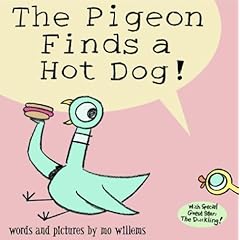
The Pigeon Finds a Hotdog


Title: The Pigeon Finds a Hotdog
Author/Illustrator: Willems, Mo
Publisher and Date: Hyperion Books for Children, 2004
Genre: Picture Book
Age Range: K-2

Summary: In this book pigeon is so excited that he finds a hotdog! He is about to put the “taste sensation” in his mouth when all of a sudden a curious young duckling arrives. Each time he is about to take a bite, the duckling asks a question. The pigeon gets so upset; he pitches fit and does not know what to do. The ducking has an idea and the reader turns the page to discover that they have decided to split the hotdog.

Response: This book was so great! The illustrations are hilarious you can see and read the emotions of the pigeon! The text goes along with each illustration. For example when the pigeon gets really annoyed with the duckling, the illustration shows him flying about with his eyes wide open and spit flying from his mouth, while the text is written in big bold yellow tainted letters that read: “IT JUST TASTES LIKE A HOTDOG, OKAY!?” Any child would be enthralled with the pigeon! The book is very readable for children of all ages!

Teaching Ideas: This is such a funny book with some great lessons for kids! One important lesson this book teaches is sharing. The pigeon wanted to eat the hotdog all by himself, but he felt guilty about not sharing with the duckling. In the end he did the right thing and compromised by splitting the hotdog in half. We need to stress to children that we may not always like to share with others, but when we do it make everybody happy!

Don't Let the Pigeon Drive the Bus!


Title: Don’t Let the Pigeon Drive the Bus!
Author/Illustrator: Willems, Mo
Publisher and Date: Hyperion Books for Children, 2003
Genre: Picture Book
Age: K-2
2004 Caldecott Honor Book

Summary: In this book you are in charge! The bus driver has to leave his bus alone for a while and asks you to watch it. He gives you only one word of caution: Don’t let the pigeon drive the bus! As a soon as he leaves the pigeon shows up and begs you in every way possible to let him drive the bus! Fortunately you do not give in and the bus driver returns to a safe and sound bus. The story ends with the pigeon spotting his next target a freightliner!

Response: I loved this book! I thought it was neat that Mo actively involved the reader throughout the entire story. The pigeons convincing was so funny; it would have the reader laughing the entire time ……”Ill be your best friend, I’ll give you 5 bucks, I bet your mom would let me, I have dreams you know, its just a bus, what’s the big deal, fine!, no fair!, ect.” You had to be on guard for the tricks, convincing, and games ( lets play drive the bus…Ill go first) the pigeon tried to pull, but good job! You didn’t let him drive the bus!

Teaching ideas: This is such a fun book to read! You could read it to a group of children just about any time of the day! It would be a great way to caution children to always be aware of the “games” people will try to play with you, and if you give your word to someone always keep it (just like we promised the bus driver we would not let the pigeon drive the bus).