Tuesday, September 9, 2008

Literature Cluster


The Dust Bowl

I chose to the cover and research the Dust Bowl, because it is an important topic that unfortunately isn’t always focused on in schools. The Dust Bowl lasted from 1930-1939 in the midst of the Great Depression, and was one of the worst economical and geographical disasters to ever hit the Panhandle (Texas, Oklahoma, New Mexico, Colorado, and Kansas) and Prairie States. I think it is so important for students to learn about the Dust Bowl because it was a part of our history. People suffered and were affected in a dramatic way. I want my students to remember these people and learn of their hopes, dreams, and survival in the midst of one the hardest periods that our country has ever known.

Grade Level: Grade 5

NC Standard Course of Study: (Social Studies) 5.08 Cite examples of surplus and scarcity in the American market and explain the economic effects.

Core Text: Out of the Dust by Karen Hesse

Hesse, Karen. Out of the Dust. Scholastic, Inc., 1997.

GENRE: Historical Fiction, Novel

ANNOTATION: This is the story of Billie Jo, a young girl growing up in Oklahoma in the early 1930’s, during the period that today we call the Dust Bowl. Her life consists of hard work and tragedy. Their farm suffers from the drought and dust, and is not doing well economically. Their family suffers many tragedies with the death of Billie Joe’s mother and brother, Billie Joe’s burnt hands and destroyed dreams, their destroyed wheat crop, and the continual dust storms. Billie Joe learns to cope with her new life and learns many valuable lessons during this trying time on our nation’s history. She ends the book with a positive outlook and a new attitude. She says, “I am like the wheat, I can’t grow everywhere, but I can grow here, with a little rain, with a little care, with a little luck.”

EXCERPTS:

Pg.21 “Ma has rules for setting the table. I place the plates upside down, glasses bottom side up, napkins folded over forks, knives, and spoons. We shake out our napkins, spread them over our laps, and flip over our glasses and plates, exposing neat circles, round comments on what life would be like without dust.”

Pg. 61 “Daddy put a pail of kerosene next to the stove and Ma, fixing breakfast, thinking the pail was filled with water, lifted it, to make Daddy’s coffee, poured it, but instead of making coffee, Ma made a rope of fire. Ma ran across the kitchen, out the porch door, screaming for Daddy. I tore after her, then, thinking of the pail left behind in the bone-dry kitchen, I flew back and grabbed it, throwing it out the door. I didn’t know. I didn’t know Ma was coming back.”

Pg.143 “Brown earth rained down from the sky. I could not catch my breath the way the dust pressed on my chest and wouldn’t stop. The dirt blew down so thick it scratched my eyes and stung my tender skin, it plugged my nose and filled inside my mouth. No matter how I pressed my lips together, the dust made muddy tracks across my tongue.”

Pg. 222 “And I know now that all the time I was trying to get out of the dust, the fact is, what I am, I am because of the dust. And what I am is good enough. Even for me.”

DISTINCTIVE FEATURES: The first thing that the reader will notice about this novel is that it is written in free verse poetry. This allows the book have both brevity and powerful word choice, because the author uses so few words on each page. This story is powerful and touching; it puts students in the middle of the Dust Bowl and teaches them how these people suffered but yet survived. This book is a Newberry Winner and would be an ideal class read; it is geared for students in fifth grade and up.

Booth, David. The Dust Bowl. Illustrated by Karen Reczuch. Kids Can Press, Ltd., 1996.

GENRE: Historical Fiction, Picture Book

ANNOTATION: Mathew, his father, and his grandfather are farmers who farm the plains of the panhandle. The plains are becoming as dry as they were during the 1930’s Dust Bowl. Mathew’s father and grandfather argue about whether to sell the farm. Mathew’s grandfather tells of the struggle to survive during the Dust Bowl. Many people moved away during that time, but Mathew’s grandparents stayed through the hard times. Eventually they saw rain and good harvests once again. At the end of the book, the three farmers decide to remain and work the farm, knowing that good times will come again soon.

EXCERPTS:

Pg.5 “When your grandma and I first farmed this land, we were young. We thought we had discovered gold in those fields of waving wheat. The world needed that wheat, and we wanted to grow enough of it for everyone.”

Pg. 12 “That wind blew for two solid weeks, blowing from the four corners of the world, blowing the land out from under our feet. It was the Big Dry. You had to see it to believe it, Mathew. It turned our world into a dust bowl. It blew doors open, broke windows, and even flattened a barn or two.”

Pg. 19 “For some, farming was becoming a slow way to starve.”

DISTINCTIVE FEATURES: David Booth’s writing style is simple and relatable. He captures the “strength and human spirit” it takes to survive struggle. The vocabulary he uses in the story would also be a valuable teaching tool for students to learn about the prairie. Words such as prairies, prairie schooners, furrows, drought, and jalopies could be looked up and defined by the students as a great way for them to learn more about the Dust Bowl. Karen Reczuch’s illustrations are also beautiful and capturing. The reader will get a great visual of what the prairie looked like during the Dust Bowl. Her paintings show the browns and oranges of the swirling dust as a back drop for her determined and life like characters. Her illustrations consist of single and double page spreads. These two features combine to make this a great and understandable teaching tool. This book is written on a third grade reading level.

Guthrie, Woody. This Land is Your Land. Illustrated by Kathy Jakobsen. Little, Brown and Company, 1998.

GENRE: Biography, Picture Book

ANNOTATION: This book is a tribute to Woody Guthrie’s most famous song, “This Land is Your Land.” The song lyrics are paired with Kathy Jakobsen’s amazing paintings to create a memorable and touching book.

EXCERPTS:

Pg 13-14 “When the sun came shining, and I was strolling, And the wheat fields waving and the dust clouds rolling, As the fog was lifting a voice was chanting: This land was made for you and me.”

Pg.21-22 “In the shadow of the steeple I saw my people; By the relief office I seen my people; As they stood there hungry, I stood there asking, I this land made for you and me?”

Pg.27-29 “This land is your land, this land is my land, From California to the New York Island; From the redwood forests to the Gulf Stream waters, this land was made for you and me.”

DISTINCTIVE FEATURES: This book begins with a note form Nora Guthrie, Woody’s daughter talking about the creation of this book, her father, and his songs. The illustrations are all beautifully painted double page spreads that perfectly complement the lyrics of the song. Kathy Jakobsen researched Woody’s life and all of his songs, and included elements from both in all of her illustrations. At the corners of various pages in the books, she has included a border with more of Woody Guthrie’s song lyrics. Her paintings are done on oil on canvas. The painted borders were inspired by notch carvings found in traditional “tramp art.” (Boxes, picture frames, and mirror frames crafted by tramps, hoboes, miners, and lumberjacks in the mid 1900’s.)The book also contains a tribute by Peter Seeger. It tells more about Woody’s life and his songs. A copy of the song is also included in the book along with a CD of Woody Guthrie singing several of his most famous songs, including “this land is your land.” This would be a great book to use to help teach the Dust Bowl, because Woody Guthrie experienced this first hand. He lived in the Panhandle States and later moved to California where he traveled around visiting migrant camps. This book is written on a third grade reading level.

Friedrich, Elizabeth. Leah’s Pony. Illustrated by Michael Garland. Boyds Mill Press, 1996.

GENRE: Historical Fiction, Picture Book

ANNOTATION: Leah is a young girl living in the Prairie states during the Great Depression and the Dust Bowl. She sells her prized pony, “the finest pony in the county,” in order to get money to save her father’s tractor during their farm auction. Leah’s courage and selflessness inspired others to help their family save their farm as well. In the end Leah was rewarded for her kindness by getting the pony she had sold back, with a note that thanked her for her sacrifice and encouraged her that these hard times wouldn’t last forever.

EXCERPTS:

Pg. 7 “The year the corn grew no taller than a man’s thumb, Leah’s house became very quiet. Sometimes on those hot, dry nights, Leah heard Papa and Mama’s joshed voices whispering in the kitchen. She couldn’t understand the words but knew their sad sound.”

Pg.11 “One hot, dry, dusty day grasshoppers turned the day to night. They ate the trees bare and left only twigs behind.”

Pg.14 “They’re going to have an auction, Leah. They’re going to sell the cattle and the chickens and the pickup truck.”

Pg.26 “Leah watched as friends and neighbors bid a penny for a chicken or a nickel for a cow or a quarter for a plow. One by one, they gave everything back to Mama and Papa.”

DISTINCTIVE FEATURES: This book is a fictional tale of a real time. Leah is such a loveable and relatable character. She pulls the reader into the story with her, and they experience firsthand her love for her pony, her worry over the auction, and her selflessness of selling her pony. The author’s writing style is straightforward and understandable. The painted illustrations are single and double page spreads that accurately portray this time period. The Dust Bowl pictures are hazy with dust and the fields are shriveled up and dead. The author’s note at the end is also helpful to understanding the story and its setting. The book is written in a second to third grade reading level.

Levey, Richard H. X-treme Disasters that changed America, Dust Bowl!: the 1930’s black blizzards. Bearport Publishing Company, Inc., 2005.

GENRE: informational text, picture book

ANNOTATION: This is an informational text that discusses the Dust Bowl years in detail. It discusses the cause of the dust problem, the rising temperatures, the main states affected, living conditions, and the nation’s response. It also defines terms such as black blizzards, Black Sunday, and “okies”.

EXCERPTS:

Pg.5 “Suddenly a huge black cloud covered the sun. It moved faster than a car racing down the street. The cloud roared across the fields. It swallowed up birds too slow to fly out of its way. The cloud was a storm filled with dirt. It was a deadly black blizzard.”

Pg.9 “People felt like they were drowning in the dust.”

Pg.27 “There hasn’t been a black blizzard since the 1930’s. Today the Great Plain states supply most of the wheat and corn used in the United States. It’s once again the nation’s breadbasket.”

DISTINCTIVE FEATURES: This book is an invaluable teaching tool for covering the Dust Bowl. It takes you through the Dust Bowl years step by step, defining the problems caused by it and discussing important dates and details. The book also contains photographs of real farms and families that were affected by the dust. I think that this will help students grasp the reality of this disaster. The book also has side notes and important facts sections with additional information. I especially loved the final pages of the book. It had sections entitled: Just Facts, Changes in America caused by the Dust Bowl, Glossary (pronunciations and definitions of terms used in the book), Learn More, and Learn More Online. All of these sections could be easily accessed and used by second graders and up.

Stanley, Jerry. Children of the Dust Bowl: The True Story of the School at Weedpatch Camp. Crown Publishers, Inc., 1992.

GENRE: Informational Text, Biography

ANNOTATION: This is the amazing true story of the immigrant (“okie”) school at Weedpatch Camp. Leo Hart, the Kern County superintendent of education, truly was an inspirational man who showed that anything is possible is you’re brave enough to fight for what is right. In the middle of the Great Depression, Leo helped these students construct their own school (Arvin Federal emergency School), a school that was theirs, where whey belonged and that they could be proud of. It had the best teachers who taught a special curriculum, its own garden and livestock to use in the cafeteria, an airplane, and a swimming pool. Leo Hart saw that these children had nothing and were despised by all, and he decide to make a difference. He gave them an education along with self confidence and invaluable memories.

EXCERPTS:

Pg.10 “It was a time of desperation. From 1930 to 1940 the number of farmers and agricultural workers in the Dust Bowl states declined by 400,000; by 1937 the unemployment rate in Oklahoma, Arkansas, and Texas had soared to 30 percent.”

Pg.25 “First the gasoline gives out. And without gasoline a man cannot go to a job if he could get one. Then the food goes. And then it rains, with insufficient food, the children develop colds because the ground in the tent is wet. I talked to a man last week who lost two children in ten days with pneumonia. His face was hard and fierce and he didn’t talk much.”

Pg.39 “One Okie father describes what it was like for Okie children in these words: Picture how you would feel with two or three children headed for school, almost barefoot, with ragged or ill-fitting clothing. You see them going down the road with a paper bag in their hands, with two baking-powder biscuits, maybe, and some beans in between. And if you were a little child how would you feel going to school that way….”

Pg. 44 “I could never understand, Leo said, why these kids should be treated differently. I could never understand why they shouldn’t be given the same opportunity as others. Someone had to do something for them because no one cared about them.”

Pg.50 “It was something to watch (the building of the school), Leo remembered. It was the first time where they were working for something of their own. It was the first time where they could be proud of who they were and what they were doing.”

Pg.69 “The teachers made us feel important and like someone really cared, Trice Masters said. The school gave us pride and dignity and honor when we didn’t have those things. It was our school. It did a great deal to cause us to believe we were special.”

Pg.76 “You know, he (Leo) said, history is full of choices. It’s possible to achieve anything. Look at these kids and look at what they’ve become.”

DISTINCETIVE FEATURES: I absolutely loved this book! It showed what a difference someone can make in the lives of so many. The personal quotes and stories used throughout the book really made it come alive. The photographs of the Mother Road, government funded immigrant camps, Leo, and the Weedpatch camp kids were vital to the story. The reader not only reads about the Dust Bowl and its effects, it can see them as well. The photographs in the book came from a variety of places including the Farm Security Administration and Leo Hart himself. The sequencing in the book is perfect. The reader learns about the Dust Bowl, the road to California, immigrant camps, and “okie” hatred. And after all of the bad, then comes the good. The story of the school is revealed in all its glory. The author’s emphasis on John Steinbeck and his book, The Grapes of Wrath, was also helpful to the background of the story. The reading level of the book is about fourth or fifth grade.

Sunday, June 8, 2008

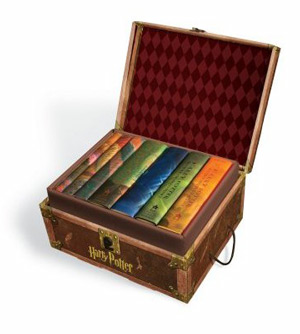
Harry Potter :-)


I just recently finished reading all seven of the Harry Potter books, and to say that I loved these books would be an understatement. J.K. Rowling is such a talented writer and her books can impart many great lessons to young readers.


One of the things I loved about Harry Potter was his knack for choosing good friends. His choice of close friends often stuck others as odd. He chose a frowned upon "muggle "lover’s son, Ron; a “mud blood”, Hermione; a dreamer, Luna; and one of the most picked on kids in school, Neville. His actions prove that a person’s background, physical appearance, and social standing doesn’t matter. A true friend can come from any background or social standing. This is such a great lesson for children and adults alike! Another thing that I especially loved about Harry Potter was his humble beginning and selfless attitude. Harry was raised by his Uncle to see himself as worthless, and even when he learned of his fame, he never became selfish or reckless. Throughout the book he always thought of others and strove to protect them and put them first. Harry is the type of friend anyone would be lucky to have, and the type of character I would love for kids and my future students to look up to. The final thing I have to say about the Harry Potter series is that I fully appreciated how the power of love conquered all. This is such an important lesson for kids to learn. Underneath the magic, the cool creatures, and the daring adventures, it is love that saved Harry from his enemies and love that helped Harry survive all his troubles.

Here are some great sites with lesson plans all about Harry Potter!


Be sure to read all seven books and check out J.K. Rowling’s amazing website!

Tuesday, April 29, 2008

The Egyptian Cinderella


Title: The Egyptian Cinderella
Author: Climo, Shirley
Illustrator: Heller, Ruth
Publisher and Date: Crowell Books, 1989
Genre: Picture Book, Multicultural, Traditional Tale
Age Range: K-5th

Summary:
Rhodopis is a young slave girl in the land of Egypt. She is noticeably different from the other servant girls (she has green eyes, light hair, and rosy sun kissed skin, while the Egyptian servant girls have brown eyes, dark hair, and copper skin.) and often gets teased and left out. They would often make her do their chores when their master wasn’t watching. The only solace Rhodopis found was in her animal friends and dancing. She would often dance after her daily chores were through, her feet moving across the earth as nimbly as a goddess. One day her master caught sight of her dancing, and to reward her for her beautiful dance he gave her a pair of rose red slippers. This made the other servant girls even more jealous of Rhodopis and they piled so many chores on her that she often felt too tired to dance. One especially cruel thing that her fellow servants did was to exclude from going to meet the Pharaoh. While she is doing her chores, however, a falcon comes and snatches one of her slippers away and delivers it to the Pharaoh. Believing it is the will of the gods that he marries the girl that the slipper fits; he sets out to find her. When he finally arrives at Rhodopis’ house, she hides in the reeds. Pharaoh spots her and makes her try on the slipper and it fits! She then produces the other shoe to match! When the other servant girls cruelly exclaim that she is not even Egyptian, the Pharaoh kindly says that her eyes are green like the Nile, her hair is feathery like papyrus, and her skin is pink like a lotus flower. Her physical beauty reflects the beauty of Egypt!

Response and Teaching Ideas:
I absolutely loved reading all the different versions of the Cinderella .I would love to read as many versions as possible so that I can introduce them all in my classroom someday. I think it is important for students from other cultures to see that their culture is being represented in the classroom. These Cinderella stories would be a great way to do so. One thing that struck me as different in this story is that Rhodopis is teased and treated cruelly by her fellow servant girls not stepsisters or a stepmother. Also, there is no magical element to this story. No fairy godmother or magical fish bones are there to save the day. The story does have elements similar to other Cinderella tales however. She is sought by a royal man to try on a shoe so that he can marry her. This story also, thankfully, has a happy ending like most Cinderella versions. I would love for my students to explore this and other versions of Cinderella and create a creative Venn diagram and an I-POEM. I think that both of these activities help students think critically about what they are reading and make each book more memorable. Be sure to check out the Egyptian Cinderella and other great Cinderella tales!

Monday, April 28, 2008

Science Verse


Title: Science Verse
Author: Scieszka, Jon
Illustrator: Smith, Lane
Publisher and Date: Scholastic, Inc., 2004
Genre: Poetry
Age Range: 2nd-5th

Science Verses is such a fun collection of poems! The book starts out with Mr. Newton, their science teacher, telling them to listen closely and try to hear the science of poetry. Our narrator feels he has been zapped by Mr. Newton and now he hears the science of poetry in everything! In fact he can’t seem to stop rhyming. This poetry anthology covers a broad range of scientific topics from Evolution and anatomy to dinosaurs and black holes. This book is so catchy that it’s sure to have students learning and laughing at the same time. What a fun way to study science!

My favorite poem from the Science Verse is…….

LOVELY

I think that I ain’t never seen
A poem as ugly as a spleen.

A poem that could make you shiver,
Like 3.5…..pounds of liver.

A poem to make you lose your lunch,
Tie your intestines in a bunch.

A poem all gray, wet, and swollen,
Like a stomach or a colon.

Something like your kidney, lung,
Pancreas, bladder, even tongue.

Why you turning green good buddy?
It’s just human body study.


This is such a funny, yet gross poem. I could have never imagined creating a poem about a spleen. I just love it because it’s so unique. When reading through the elements of good poetry in the Temple textbook I noticed that this science verse fits two of them. The first element I noticed was rhyme. Every poem in Science Verse had an ending line rhyme to it. I think rhyme is an important part of poetry because it gives it a musical quality, which in turn makes it easier to read and more memorable to the reader. The second element I noticed is imagery. Can’t you just picture the human spleen from the visual imagery descriptions in this poem? It describes it as weighing 3.5 pounds and being wet, gray, and swollen. These poems are such a treat! Be sure to check them out….just don’t eat any lunch first!
Here's a great site with lesson plans and all for Science Verse!

Sitti's Secrets


Title: Sitti’s Secrets
Author: Nye, Naomi Shihab
Illustrator: Carpenter, Nancy
Publisher and Date: Aladdin Paperbacks, 1994
Genre: Picture Book, Multicultural
Age Range: K-3rd

Summary:
This is the story a young girl and her grandmother. She and her grandmother live very far apart; she lives in the United States, while her grandmother lives in Palestine. When it is time for her to go to bed, her Grandmother is just getting up. During the story, she recounts her very first visit to her grandmother’s home in Palestine. She talks about the difference in their languages, but how this allowed them to come up with their own special language. She called her grandmother, Sitti, which means Grandmother in Arabic, and her grandmother called her Habibi which means darling. During her visit, she and her grandmother were inseparable; they got milk from a real cow, watched men pick lentils in the field, made meals together, and combed her Grandmother’s long, striped hair. Her Grandmother’s hair was usually hidden under a scarf, so when her Grandmother let her see and fix it, she felt like she knew a secret. When it was time for her and her father to leave, everyone cried and hugged and her Grandmother gave her a beautiful handmade purse. When she returned to the United States she wrote a letter to the President telling him about her Grandmother and asking for peace. (I think it is important to touch on the continuing conflict between Isreal and Palestine.)

Response:
This is such a touching story! Every child should have a great relationship with their grandmother. I love how they were both able to share parts of their culture with each other even though they didn’t speak the same language. Sitti showed her Habibi how she hangs the laundry out to dry on the rooftop and how the women walk to get water in the afternoon. She teaches her how to make bread and how to serve lemonade with the fruit grown on her own lemon tree. A Grandmother’s love and life lessons are universal and timeless. This is a common thread that ties readers to this unique and heartfelt tale. I had such a great relationship with my Grandmother; she taught me how to make my coffee the “right” way, to make Spaghetti, and to make up beds and fluff pillows. I love the way Nancy Carpenter states this in her illustrator’s note. She say, “What I discovered in my research….is a culture so very different from my own, with traditions that go back hundreds of years. Mona’s Sitti, especially comes form a time and a place where people have been wearing the same style of clothes, eating the same food, planting the same crops, and living on the same land for centuries. I live in a culture where people get a new spring wardrobe every year, change their hairstyle every few months, and eat various ethnic foods every night of the week. What I CAN relate to in this story is universal-enjoying a sunny day and lemonade, playing games with friends, loving the smell of fresh baked bread, and knowing the special bond between Grandparent and child.” This is such an important mindset to have; we need to look for similarities, not differences when we encounter someone who is a different nationality from our own. We are more alike than we may think. Also make sure to pay special attention to the illustrations in this book. They are beautifully painted to reveal the true colors of the desert and to depict the closeness of a grandparent-grandchild bond.


Teaching Ideas:
This would be a great book to read with Kindergarteners when they are studying about families. They can see that families come in all shapes, sizes, and nationalities. Another great idea would be to have students read Sitti’s Secrets and then write five similarities that they share with her. This would be a good way to show the universality of this tale.

Sunday, April 27, 2008

The Power of Positive Thinking


Title: Becoming Naomi Leo’n
Author: Ryan, Pam Munoz
Publisher and Date: Scholastic, Inc., 2004
Genre: Realistic Fiction, Multicultural
Age Range: 4th-6th

Summary:
Naomi Soledad Leo’n Outlaw lives in a in a small trailer named “Baby Beluga” in Avocado Acres Trailer Rancho in Lemon Tree, California. She lives with her Great-Grandmother, Gram, and her younger brother, Owen. Naomi and Owen have been raised by Gram ever since their mother, “Skyla” dropped them off as young children when she went “to find herself.” Naomi is the narrator of the story and she shares her life with the reader throughout the book. You read of her struggle to be accepted at school. How the boys make fun of her last name Outlaw and call out “have you robbed any banks lately?” or “Is this a stickup?” She is an outcast with the girls in her school as well, because she is quiet and looks different. Her father is from Mexico and her mother is from America, so she is darker that most of the girls in her class. She has even heard one girl refer to her as “trailer trash.” Naomi doesn’t complain much about her life, however, because Gram has taught her to be a positive thinker and a believer in self prophecy. When she asks Gram what to do about the teasing boys, Gram says to write “Those boys will not bother me” over and over again until she believes it. Naomi’s brother, Owen also has trouble fitting in at school. He was born with a deformity that even after several surgeries has left his head leaning slightly to the side and pointed down. He is picked on at school as well for his unusual habit of wearing strips of tape on his shirt every day.


Naomi and Owen’s lives changes dramatically one day when their mother, Terri Lynn, (or Skyla as she now wants to be called) returns to town. She shows up at the doorstep on “Wednesday chicken bake” after being absent for seven years. Naomi knows nothing about her mother’s past except that she dates a tattoo artist name Clive, and she is an alcoholic who has been in and out of rehab and halfway houses for years. Skyla wants to take Naomi to live with her and Clive in Los Angles and to be a big sister to Clive’s daughter Sapphire. Naomi tells her mother no and receives a slap in the face for her “bad attitude.”


Naomi, Gram, Owen, Fabiola, Bernardo (their family friends), and “Baby Beluga” escape from Skyla and travel to Oaxaca, Mexico in search of Naomi and Owen’s father. They arrive in Mexico five days later to stay with Fabiola’s sister’s family. Naomi enjoys Mexico very much, and believes with all of her heart that they will find their father. On the night of the Festival of the Radishes (La Noche de los Rabanos), Naomi and her family finally come face to face with her father. After many tears, hugs, kisses, and promises to visit later it is time for Naomi and her family to head back to California for their custody court hearing against Skyla. In court, Naomi faces her fears and bravely tells the court her story loudly and truthfully. In the end, the court decides to grant Gram custody of Owen and Naomi and their lives will never be the same. Naomi has become brave, embraced her individuality, and finally lived up to her name “Naomi the lion.” She has many great years ahead of her to look forward to with Gram, Owen, her father, and faithful neighbors and friends.

Response:

Wow, is all I can say about this book. I wasn’t initially sure I was going to connect with this book, but after the first chapter, I was already falling in love with the characters and the setting. I loved how each character was so true to life, and how the setting was a down home friendly place where anyone one would be lucky to live.

Naomi was one of my favorite characters. She went through so much in this story. As an adolescent girl she is struggling to fit in a culture that tends to be unkind to anyone it considers “different.” She is teased by the boys because of her “different” last name, and she is shunned by the girls because she looks “different.” I love the way Gram tells Naomi to deal with these problems; she teaches Naomi the power of positive thinking and self prophecy. If you are positive about something and keep telling yourself something then and begin to work toward it, then one day undoubtedly it will happen. I loved this lesson so much that I chose it for the tile of my entry. This is such a positive message for us all. When faced with adversity, we need to remember that we can only control our actions and our thinking, not others. This book will also give students an inside look at what it feels like to be teased. Naomi had dreams, hopes, and talents, just like us all. Maybe the next time a student begins to tease someone they will think of Naomi Leo’n and remember not only how hurtful it is, but also how alike we all really are.

Mr. Marble, the librarian, is also one of my favorite characters. He is such a good example of the difference one caring adult can make in a child’s life. He gave the outsiders at school a place where they could belong. He showed them they were special by nicknaming them his lunch club kids. He always listened to Naomi and had something positive to say. He encouraged her, helped her find books to read, and even extended to her the special honor of displaying her soap carving in the display case during open house. He gave her a safe place at school; he cared and that truly made a difference.

Gram and Santiago Leon (Naomi’s father) are my other two favorite characters. I loved Gram for her faithfulness and dedication to her grandchildren. She taught them so many positive life lessons, gave up her “golden years” for them, and provided for them in the best way that she could. Santiago is also special to me, because even when he thought he could not be a part of his children’s lives, he never abandoned them. He wanted them, and sent money to help support them. Many students could be ale to relate well to this story, because they too could have experienced this scenario. This is such a great story, because it shows that a family is not just a mom, dad, and kids; a family is any group people who love, support, and care for one another unconditionally.

Listed here are the criteria for good multicultural literature from the Temple Textbook:
· Do the author and illustrator present authentic perspectives?
· Is the culture portrayed multi-dimensionally?
· Are the cultural details naturally integrated?
· Are details accurate and is the interpretation current?
· Is language used authentically?


When I think of good multicultural literature I think of the analogy given in our Temple Text of windows and mirrors. “Mirrors let them (children) see reflections of their own lives; windows let them see other’s lives.” I think this is such an important part of multicultural literature; for a book to truly be good it must first be truthfully representative of the culture it portrays and second it must be engaging and teach about that culture. I think that Becoming Naomi Leon definitely qualifies as good multicultural literature. Pam Munoz Ryan gives us such wonderful insider perspective into to the culture using her own background as a springboard. She represents this part of her heritage very accurately. I definitely think the Mexican culture is represented authentically throughout the book. Mexican customs, celebrations, and speech (such as the Spanish words and translations) are integrated into the book without taking away from the flow of the story. Family is another theme that is emphasized in the story. This is very important to the Mexican culture; usually Hispanic families are close knit families that can count on each other for anything and everything. Families are not only part of the Mexican culture though; families are universal and can give students a good reference point for the story. I also think that the story portrays the culture multidimensionally. It shows a quite a variety of people who don’t think or act the same. They share similar customs and beliefs but they undeniably unique. The book also doesn’t stereotype Mexican Americans. One common stereotype we place on them is that we see them as all wanting to come to America. In this story, quite the opposite occurs. Mexico, specifically Oaxaca, is represented as such an inviting place that Naomi yearns to live there. All in all Becoming Naomi Leo’n is such a good book for students to read. It opens children’s eyes to a new cultural perspective and allows them to be empathetic to others who are different from themselves.

Here are some of the cultural markers in Becoming Naomi Leo’n:
Noche de Rábanos
las posadas
Carving: soap carving, wood carving, and radish carving
Food: mole, pan dulce, quesillo, pina coco
Close family relationships
Spanish Language
Piñatas
Nuestra Senora de la Soledad


Teaching Ideas:
I would definitely read this book with students. I would encourage them to immerse themselves in the culture; I would bring in food to try, share information about the celebrations mentioned in the story, and maybe even let them try their hand at soap carving. I would also encourage my students to imagine what it would be like to live in a foreign culture. They could write a journal article expressing their thoughts and comparing their reaction to Naomi’s.

Thursday, April 24, 2008

Dim Sum for Everyone


Title: Dim Sum for Everyone
Author/ Illustrator: Lin, Grace
Publisher and Date:Alfred A. Knopf, 2001
Genre:Multicultural, Picture Book
Age Range:k-2nd


Summary:
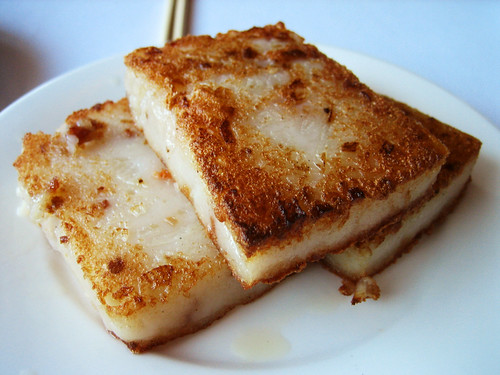
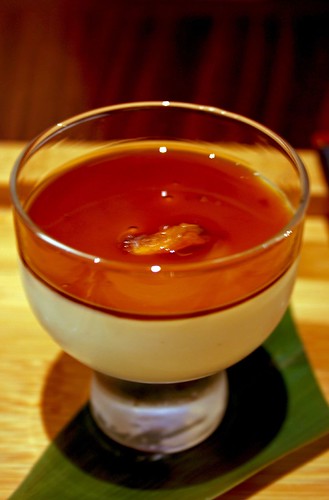
This story is narrated by a young girl. She and her family are visiting a dim sum restaurant in Chinatown. She takes you on a tour of the restaurant and shares with you what her family had to eat. She explains that dim sum is served on carts and can be found on tables as well. He mother(Ma-Ma) chooses sweet pork buns, her father (Ba-Ba) chooses fried shrimp, her siblings Jei-Jei and Mei-Mei choose turnip cakes and sweet tofu, and she chooses little egg tarts. Dim Sum is traditionally served in little dishes, and everyone tries a little bit of everything. Dim Sum can be translated to mean “touches the heart or little heart.” It originally began as an appetizer or snack served in teahouses. It soon became so popular that restaurants opened to exclusively serve Dim Sum. Dim Sum wasn’t brought over to the Western world until the 19th century. There are several cool customs that go along with Dim Sum. To thank your waiter you tap three fingers on the table, and the waiters don’t clear away dirty dishes from the table, they count them to calculate the bill.

Response and Teaching Ideas:
This was such a unique book! I would have never imagined I could learn so much about another culture in just a few short pages. It would be a great book to reader with younger children. The words are simple enough that they can practice repeating them after you, and predicting what the text will say next. The brightly colored, double page spread illustrations are also sure to draw students in. I particularity loved the picture showing the whole room filled with families all eating Dim Sum. I loved seeing that there was such a diverse crowd of people represented in her illustrations. I think it would be so neat to focus on the Chinese tradition of Tea houses and Dim Sum. You could cover the history and serve traditional food. Students could also plan their own imaginary trip to Chinatown and write about what they would see and eat.